
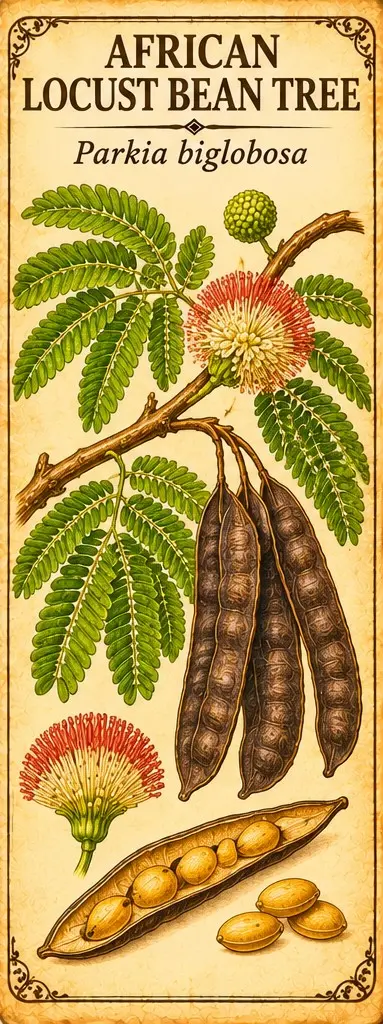
African Locust Bean Tree
Parkia biglobosa
A West African tree whose fermented seeds make dawadawa, soumbala or iru, a protein-rich savory paste. The paste lowered cholesterol in rats.
Safety at a glance
- PregnancyNothing recorded
- BreastfeedingNothing recorded
- MedicinesNothing recorded
- Who should avoid itNothing recorded
- AllergiesNothing recorded
- ToxicityNothing recorded
Tap a box to read the safety notes below. “Nothing recorded” means our sources don't cover it, not that it's safe.
What is African Locust Bean Tree?
- Plant family
- Fabaceae, the pea and bean family
- Parts used
- The seeds, pods, bark and leaves
- Where it grows
- West Africa
- Genus
- Parkia
- Species
- biglobosa
Also called
Dawadawa, Néré
Regional names
Iru, Soumbala
Traditionally used for
- Food flavoring
- Diarrhea
- High blood pressure (traditional)
Traditionally described as
- Fermented seeds are high in protein
- iron and zinc
Health topics
Where African Locust Bean Tree appears in symptom search, and why. Being listed doesn't mean it's a proven treatment.
- Diarrhea
A traditional West African remedy for diarrhea. Not studied in people.
- High Cholesterol
The fermented seed condiment lowered cholesterol in rats. Not tested in people.
Safety
Contamination
Traditionally fermented dawadawa contains a mix of bacteria, including Staphylococcus and Streptococcus, so hygiene during fermentation matters.[1]Study
What does the research say?
Traditional use
These are traditional uses, not proven treatments.
The seeds, gathered mostly by rural women, are fermented into a rich, savory paste (soumbala, dawadawa or iru) that's a protein-rich, meat-like flavoring in much of West African cooking.[2]Study
In West African traditional medicine it's used for infections such as diarrhea, and for high blood pressure and type 2 diabetes.[3]Study
Laboratory & animal research
Lab and animal results show what might be worth studying in people. They don't show that the herb has these effects in humans.
In short
Traditionally fermented paste can carry bacteria, so hygiene matters.
Sources
- [1] Microbial Diversity, Nutritional Composition, and Health Implications of Fermented Locust Bean Seed (Dawadawa) From Ghana · DOI: 10.1155/ijfo/8444101Peer-reviewed study
- [2] Protein Quality of African Locust Bean-A High-Value Gathered Tree Food Contributing Protein and Palatability to Plant-Based Diets · DOI: 10.1155/2024/1596212Peer-reviewed study
- [3] Contemporary Insights into the Biological Mechanisms of Parkia biglobosa · DOI: 10.3390/ijerph21040394Peer-reviewed study
- [4] Local Condiment, Iru, Obtained from the Fermentation of Parkia biglobosa Seed Substantially Reduced the Serum Cholesterol Level of Wister Rats · DOI: 10.3746/pnf.2020.25.2.153Peer-reviewed study
This information is educational and traditional in nature, and is not a substitute for professional medical advice. Unfamiliar word? See what these words mean.