
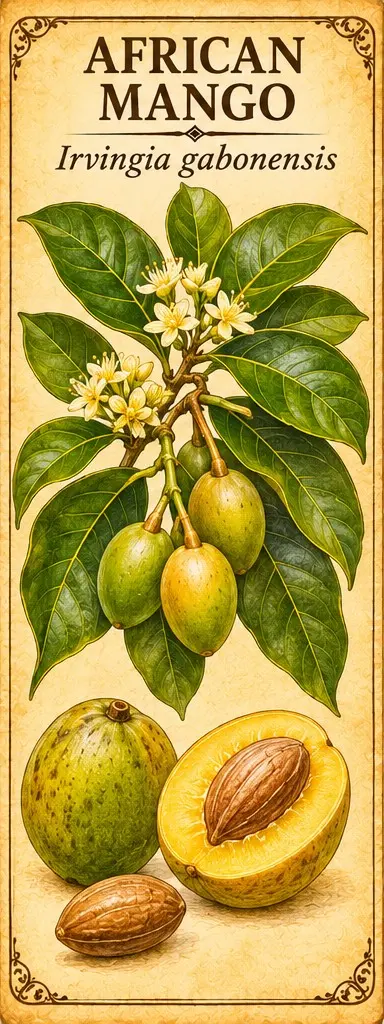
African Mango
Irvingia gabonensis
A West and Central African tree whose kernels (ogbono) thicken soups. It's sold for weight loss, but the trials are poor quality and the effect is unproven.
Safety at a glance
- PregnancyNothing recorded
- BreastfeedingNothing recorded
- MedicinesNothing recorded
- Who should avoid itNothing recorded
- AllergiesNothing recorded
- ToxicityNothing recorded
Tap a box to read the safety notes below. “Nothing recorded” means our sources don't cover it, not that it's safe.
What is African Mango?
- Plant family
- Irvingiaceae, the bush mango family
- Parts used
- The fruit, seeds (kernels), bark and leaves
- Where it grows
- Tropical West and Central Africa
- Genus
- Irvingia
- Species
- gabonensis
Also called
Bush Mango, Dika Nut
Regional names
Ogbono
Traditionally used for
- Food
- Weight loss (supplement use)
Traditionally described as
- Kernels used as a soup thickener
Health topics
Where African Mango appears in symptom search, and why. Being listed doesn't mean it's a proven treatment.
- Menopausal Weight Gain
Weight-loss trials were poor quality and the effect is unproven. Not tested in menopause.
Traditions that use it
- African Traditional Medicine
Fruit, kernels, bark and leaves used across tropical Africa.
How it's prepared
Common ways African Mango is prepared or sold. This isn't advice on how to take it; see Safety below.
- Culinary Preparation
Ground kernels used to thicken soups.[1]Study
Safety
Side effects
Side effects reported in weight-loss trials included headache and trouble sleeping.[2]Review or trial
What does the research say?
Traditional use
These are traditional uses, not proven treatments.
The kernels (ogbono) are widely traded and used to thicken traditional soups. The fruit is eaten fresh or made into juice and wine. In folk medicine the seeds are used for weight loss and diabetes, and the bark for dysentery, colic, scabies, toothache and skin problems.[1]Study
Research in people
A 2013 review of 3 trials found all reported weight loss and smaller waists, but the trials were poorly reported, so the effect on weight is unproven and African mango can't be recommended for weight loss.[2]Review or trial
In a 2022 placebo-controlled trial in overweight adults, 300 mg of kernel extract a day for 12 weeks raised vitamin C and adiponectin (a hormone linked to better metabolism), but didn't change metabolism, inflammation or fitness compared with placebo.[3]Study
In short
Weight-loss claims are unproven; may cause headache and trouble sleeping.
Sources
- [1] Irvingia gabonensis baill. (African Mango): A comprehensive review of its ethnopharmacological significance, unveiling its long-standing history and therapeutic potential · DOI: 10.1016/j.jep.2024.117942Peer-reviewed study
- [2] The efficacy of Irvingia gabonensis supplementation in the management of overweight and obesity: a systematic review of randomized controlled trials · DOI: 10.3109/19390211.2012.760508Review or clinical trial
- [3] Effects of Irvingia gabonensis Extract on Metabolism, Antioxidants, Adipocytokines, Telomere Length, and Aerobic Capacity in Overweight/Obese Individuals · DOI: 10.3390/nu14214646Peer-reviewed study
This information is educational and traditional in nature, and is not a substitute for professional medical advice. Unfamiliar word? See what these words mean.