
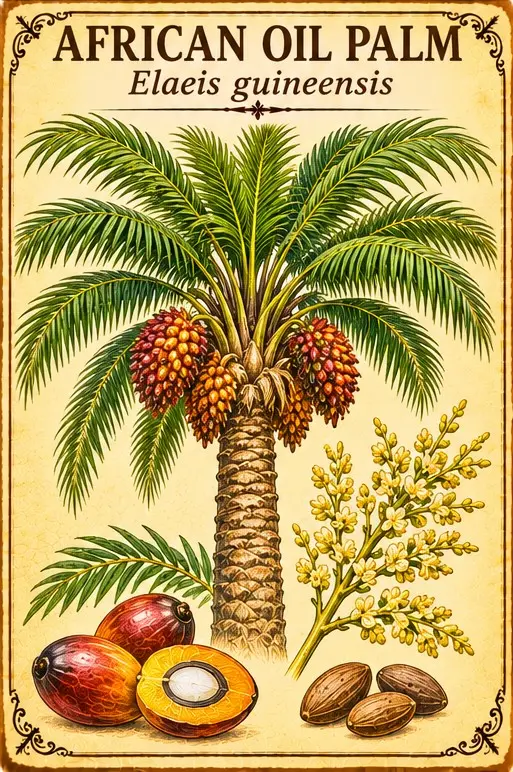
African Oil Palm
Elaeis guineensis
The West African palm that gives palm oil. Red palm oil prevents vitamin A deficiency, but palm oil raises LDL cholesterol more than liquid vegetable oils.
Safety at a glance
- PregnancyNothing recorded
- BreastfeedingNothing recorded
- MedicinesNothing recorded
- Who should avoid itNothing recorded
- AllergiesNothing recorded
- ToxicityNothing recorded
Tap a box to read the safety notes below. “Nothing recorded” means our sources don't cover it, not that it's safe.
What is African Oil Palm?
- Plant family
- Arecaceae, the palm family
- Parts used
- The fruit (palm oil) and kernel
- Where it grows
- West and Central Africa
- Genus
- Elaeis
- Species
- guineensis
Also called
Palm Oil, Red Palm Oil
Traditionally used for
- Cooking oil
- Vitamin A source
Traditionally described as
- Red palm oil rich in beta-carotene; high in saturated fat
Safety
Side effects
Palm oil is high in saturated fat and raises LDL cholesterol more than liquid vegetable oils.[1]Review or trial
What does the research say?
Research in people
Unrefined red palm oil is rich in beta-carotene. A review of 9 trials found it cut the risk of vitamin A deficiency by about 45% and raised vitamin A levels in children and adults; about 8 grams a day was enough.[2]Review or trial
A review of clinical trials found palm oil raised LDL ("bad") cholesterol compared with oils low in saturated fat, like olive or canola.[1]Review or trial
In short
Raises LDL cholesterol.
Sources
- [1] Palm Oil Consumption Increases LDL Cholesterol Compared with Vegetable Oils Low in Saturated Fat in a Meta-Analysis of Clinical Trials · DOI: 10.3945/jn.115.210575Review or clinical trial
- [2] The Effect of Red Palm Oil on Vitamin A Deficiency: A Meta-Analysis of Randomized Controlled Trials · DOI: 10.3390/nu9121281Review or clinical trial
This information is educational and traditional in nature, and is not a substitute for professional medical advice. Unfamiliar word? See what these words mean.