
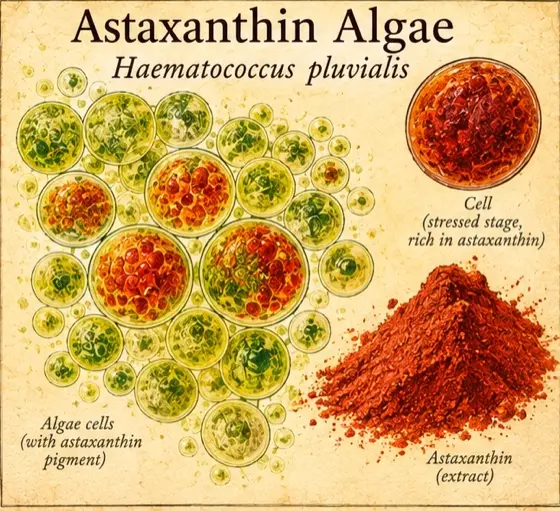
Astaxanthin Algae
Haematococcus pluvialis
A freshwater alga that turns red with astaxanthin, a powerful carotenoid pigment sold in supplements. In overweight adults it reduced markers of inflammation and cell damage and slightly improved blood fats.
Safety at a glance
- PregnancyNothing recorded
- BreastfeedingNothing recorded
- MedicinesNothing recorded
- Who should avoid it1 note →
- AllergiesNothing recorded
- ToxicityNothing recorded
Tap a box to read the safety notes below. “Nothing recorded” means our sources don't cover it, not that it's safe.
What is Astaxanthin Algae?
- Plant family
- Haematococcaceae
- Parts used
- The dried, crushed algae (or an oil extract), rich in astaxanthin
- Where it grows
- Fresh water worldwide (grown commercially)
- Genus
- Haematococcus
- Species
- pluvialis
Also called
Astaxanthin, Haematococcus, Red Microalgae
Traditionally used for
- Antioxidant supplement (studied)
- Blood fats (studied)
Traditionally described as
- Rich in the red carotenoid astaxanthin
Health topics
Where Astaxanthin Algae appears in symptom search, and why. Being listed doesn't mean it's a proven treatment.
- High Cholesterol
Pooled trials in overweight adults found small improvements in cholesterol and triglycerides.
Natural compounds
Safety
Who should avoid it
For children aged 3 and over and teenagers, the agency says astaxanthin-fortified drinks and dairy alternatives are safe only if astaxanthin supplements aren't taken on the same day.[1]Health agency
How much to use
Europe's food safety agency sets a safe daily intake for astaxanthin of 0.2 mg per kg of body weight, about 14 mg a day for a 70 kg adult. Adding supplements to astaxanthin from food (fish, shrimp and fortified products) can push adults to this limit and children over it.[1]Health agency
Technical detail: acceptable daily intake (ADI) 0.2 mg/kg bw per day.
What does the research say?
Traditional use
These are traditional uses, not proven treatments.
Haematococcus is a single-celled freshwater alga. When stressed, it turns red as it fills with astaxanthin, a carotenoid pigment (the same family as the orange pigment in carrots). Dried algae containing about 5% astaxanthin has been sold in food supplements since the 1990s.[1]Health agency
Technical detail: produced by homogenising, crushing and spray-drying cultivated H. pluvialis biomass.
Research in people
A 2026 review of 16 trials with 694 overweight or obese adults found that astaxanthin reduced markers of cell damage and inflammation. It also slightly improved cholesterol and triglycerides. It didn't change weight, body mass index or blood pressure. Longer use (12 weeks or more) and higher doses (12 mg a day or more) gave bigger improvements in blood fats. The certainty of the evidence was low to very low for several results.[2]Review or trial
Technical detail: MDA SMD −1.75; CRP −0.35; IL-6 −0.69; TG −2.90 mg/dL; total cholesterol −2.73 mg/dL; LDL-C −1.09 mg/dL; HDL-C +1.04 mg/dL; SOD and TAC increased.
In short
Europe sets a safe intake of 0.2 mg per kg of body weight a day; children shouldn't combine supplements with fortified foods.
Sources
- [1] Safety of algal meal from Haematococcus pluvialis containing astaxanthin as a novel food pursuant to Regulation (EU) 2015/2283 — European Food Safety Authority (EFSA) Panel on Nutrition, Novel Foods and Food Allergens · DOI: 10.2903/j.efsa.2025.9736Government health agency
- [2] Astaxanthin supplementation and cardiometabolic risk factors in overweight and obese adults: a GRADE-assessed systematic review and meta-analysis · DOI: 10.1186/s12986-026-01188-zReview or clinical trial
This information is educational and traditional in nature, and is not a substitute for professional medical advice. Unfamiliar word? See what these words mean.