
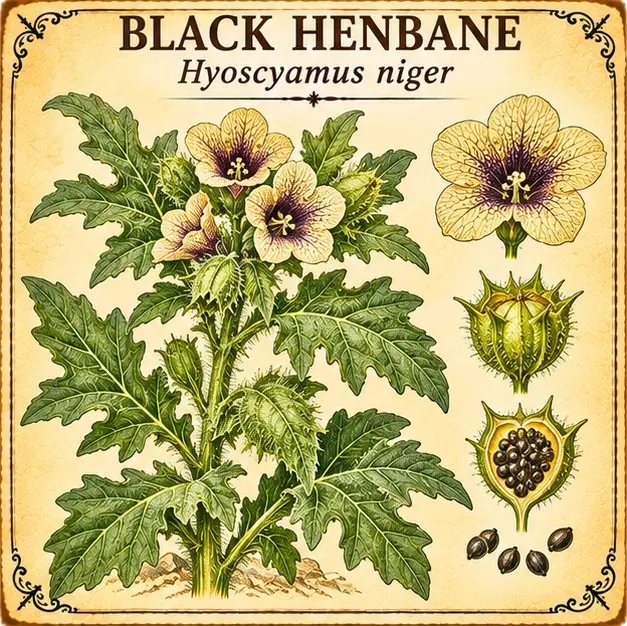
Black Henbane
Hyoscyamus niger
A poisonous plant containing atropine-like alkaloids. It was used for centuries for pain and cough, but poisoning causes hallucinations, a racing heart and seizures.
Safety at a glance
- PregnancyNothing recorded
- BreastfeedingNothing recorded
- MedicinesNothing recorded
- Who should avoid itNothing recorded
- AllergiesNothing recorded
- Toxicity3 notes →
Tap a box to read the safety notes below. “Nothing recorded” means our sources don't cover it, not that it's safe.
What is Black Henbane?
- Plant family
- Solanaceae, the nightshade family
- Parts used
- The leaves, seeds and roots (all poisonous)
- Genus
- Hyoscyamus
- Species
- niger
Also called
Henbane
Traditionally used for
- None (poisonous)
Traditionally described as
- Contains hyoscyamine
- atropine and scopolamine
Safety
Toxicity testing
Poisonous. Poisoning causes wide pupils, a fast or irregular heartbeat, dry mouth, hot flushed skin, fever, blurred vision, trouble urinating, confusion, hallucinations, seizures and coma. It can be deadly, especially in children.[1]Study
A gardener who ate parts of the plant became confused, saw things and had wide pupils. He recovered in hospital.[2]Study
An 11-year-old boy who ate about a tablespoon of the seeds became hyperactive, disoriented and had hallucinations. He recovered within 24 hours.[3]Study
What does the research say?
Traditional use
These are traditional uses, not proven treatments.
Used as a medicine for centuries and described in many traditional medicine systems. Chinese and Indian traditional medicine used it for stomachache, heavy cough and nerve pain. Anglo-Saxon healers used it for toothache.[1]Study
Every part contains tropane alkaloids, including hyoscyamine, atropine and scopolamine. These relax muscles, dry up secretions, widen the pupils and act on the brain.[1]Study
In short
Poisonous; can be deadly, especially to children.
Sources
- [1] Black henbane and its toxicity - a descriptive reviewPeer-reviewed study
- [2] Hyoscyamus niger poisoning in Sudan: A case report · DOI: 10.1177/00494755241289456Peer-reviewed study
- [3] Hyperactivity and Euphoria Without Agitation Due to Hyoscyamus niger (Henbane) Poisoning in a Child · DOI: 10.7759/cureus.107588Peer-reviewed study
This information is educational and traditional in nature, and is not a substitute for professional medical advice. Unfamiliar word? See what these words mean.