
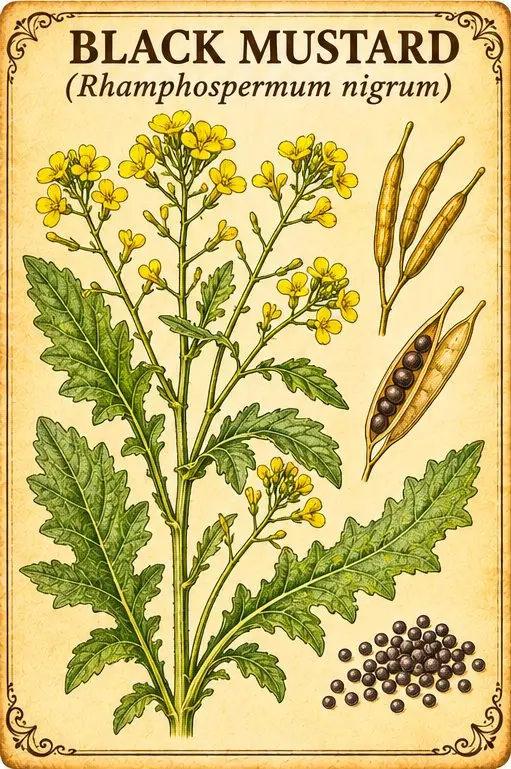
Black Mustard
Brassica nigra
A mustard whose seeds are used in Asian traditional medicine. Research so far is in the lab and in rats.
Safety at a glance
- PregnancyNothing recorded
- BreastfeedingNothing recorded
- MedicinesNothing recorded
- Who should avoid itNothing recorded
- AllergiesNothing recorded
- ToxicityNothing recorded
Tap a box to read the safety notes below. “Nothing recorded” means our sources don't cover it, not that it's safe.
What is Black Mustard?
- Plant family
- Brassicaceae, the mustard and cabbage family
- Parts used
- The seeds
- Genus
- Brassica
- Species
- nigra
Older scientific names
Rhamphospermum nigrum
Traditionally used for
- Traditional medicine in Asia
Traditionally described as
- Seeds
What does the research say?
Traditional use
These are traditional uses, not proven treatments.
Black mustard is widely used in Asia for its healing properties, and it also has a history of spiritual use.[1]Study
Laboratory & animal research
Lab and animal results show what might be worth studying in people. They don't show that the herb has these effects in humans.
In a 2026 lab study, black mustard seed extracts acted as antioxidants, slowed the growth of a common skin bacterium, and lowered signs of inflammation in cells.[2]Study
In a 2026 rat study, seed and sprout extracts given for 3 weeks reduced liver damage from a paracetamol (acetaminophen) overdose. The sprout extract worked better. This has not been tested in people.[3]Study
In short
No human safety data.
Sources
- [1] An Overview of Black Mustard (Brassica nigra L.): Important Facts, Constituents, Health Benefits, Profuse Therapeutic Applications, and Adverse Effects: A Mini Review · DOI: 10.1111/1750-3841.70653Peer-reviewed study
- [2] Brassica nigra L. Seed Extracts as a Promising Source of Antioxidant and Anti-Inflammatory Agents · DOI: 10.3390/ijms27104603Peer-reviewed study
- [3] Comparative assessment of Brassica nigra seed and its sprout ethanolic extracts against paracetamol-induced hepatotoxicity in rats: insight into antioxidant and anti-apoptotic pathways · DOI: 10.3389/fnut.2026.1807243Peer-reviewed study
This information is educational and traditional in nature, and is not a substitute for professional medical advice. Unfamiliar word? See what these words mean.