
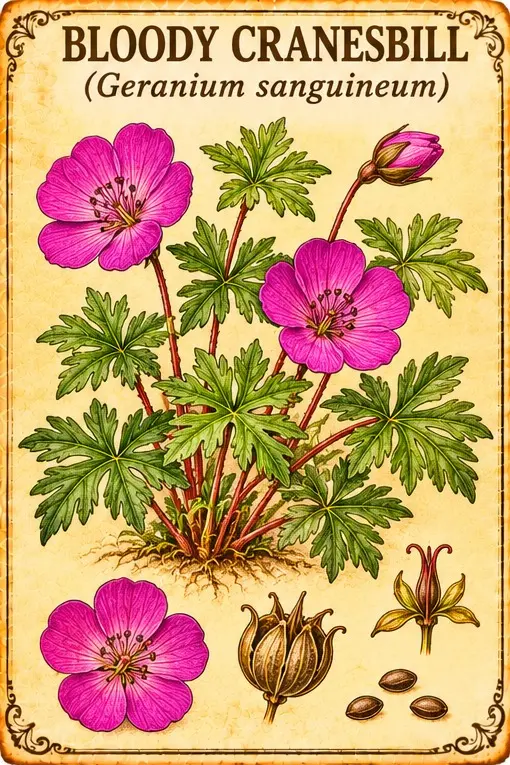
Bloody Cranesbill
Geranium sanguineum
A wild geranium whose polyphenols blocked viruses in lab studies. It's part of a Bulgarian tablet that eased period pain in a small open study.
Safety at a glance
- PregnancyNothing recorded
- BreastfeedingNothing recorded
- MedicinesNothing recorded
- Who should avoid itNothing recorded
- AllergiesNothing recorded
- ToxicityNothing recorded
Tap a box to read the safety notes below. “Nothing recorded” means our sources don't cover it, not that it's safe.
What is Bloody Cranesbill?
- Plant family
- Geraniaceae, the geranium family
- Parts used
- The above-ground parts
- Genus
- Geranium
- Species
- sanguineum
Also called
Bloody Geranium
Traditionally used for
- Period pain
- Viral infections (lab)
Traditionally described as
- Rich in polyphenols
Health topics
Where Bloody Cranesbill appears in symptom search, and why. Being listed doesn't mean it's a proven treatment.
- Menstrual Discomfort
Part of a combination tablet that eased period pain in a small open study.
Safety
Depends on how it's prepared
There are few human safety studies.[1]Study
What does the research say?
Laboratory & animal research
Lab and animal results show what might be worth studying in people. They don't show that the herb has these effects in humans.
In lab studies, polyphenol extracts blocked virus replication, eased inflammation and acted as antioxidants. There's no clinical evidence yet, including for COVID-19.[1]Study
Research in people
In an open study of 35 young women with painful periods, a Bulgarian tablet (Neomenor) with bloody cranesbill and two other herbs eased period pain over 3 months in most of them. There was no comparison group.[2]Study
In short
Few human safety studies.
Sources
- [1] Emerging Therapeutic Potential of Polyphenols from Geranium sanguineum L. in Viral Infections, Including SARS-CoV-2 · DOI: 10.3390/biom14010130Peer-reviewed study
- [2] Six-month follow-up of the effect of neomenor in patients with painful menstruationPeer-reviewed study
This information is educational and traditional in nature, and is not a substitute for professional medical advice. Unfamiliar word? See what these words mean.