
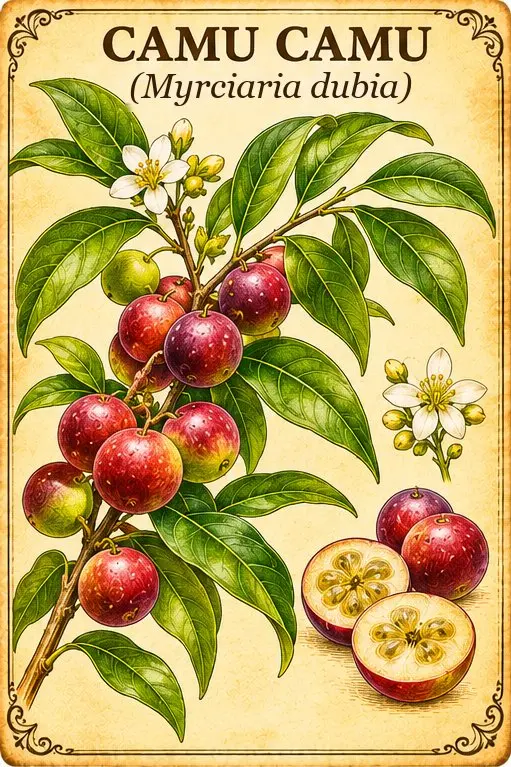
Camu Camu
Myrciaria dubia
An Amazonian fruit with exceptionally high vitamin C. Its other effects have mostly been studied in the lab and animals.
Safety at a glance
- PregnancyNothing recorded
- BreastfeedingNothing recorded
- MedicinesNothing recorded
- Who should avoid itNothing recorded
- AllergiesNothing recorded
- ToxicityNothing recorded
Tap a box to read the safety notes below. “Nothing recorded” means our sources don't cover it, not that it's safe.
What is Camu Camu?
- Plant family
- Myrtaceae, the myrtle family
- Parts used
- The fruit, often as a powder
- Genus
- Myrciaria
- Species
- dubia
Traditionally used for
- Vitamin C source
Traditionally described as
- Very high in vitamin C
What does the research say?
Traditional use
These are traditional uses, not proven treatments.
Camu camu is a small fruit native to the Amazon. It is prized for its vitamin C, with up to 2,800 mg per 100 g of pulp, far more than oranges or acerola cherries.[1]Study
Laboratory & animal research
Lab and animal results show what might be worth studying in people. They don't show that the herb has these effects in humans.
Lab and animal studies suggest camu camu acts as an antioxidant and may help reduce inflammation, fight bacteria and lower blood sugar and blood pressure. A 2025 review said human trials are still needed to confirm these effects and work out the right doses.[1]Study
In short
Human research is limited.
Sources
- [1] Nutritional Composition, Pharmacological Properties, and Industrial Applications of Myrciaria dubia: An Undiscovered Superfruit · DOI: 10.1002/fsn3.70331Peer-reviewed study
This information is educational and traditional in nature, and is not a substitute for professional medical advice. Unfamiliar word? See what these words mean.