
Cannabis
Cannabis sativa
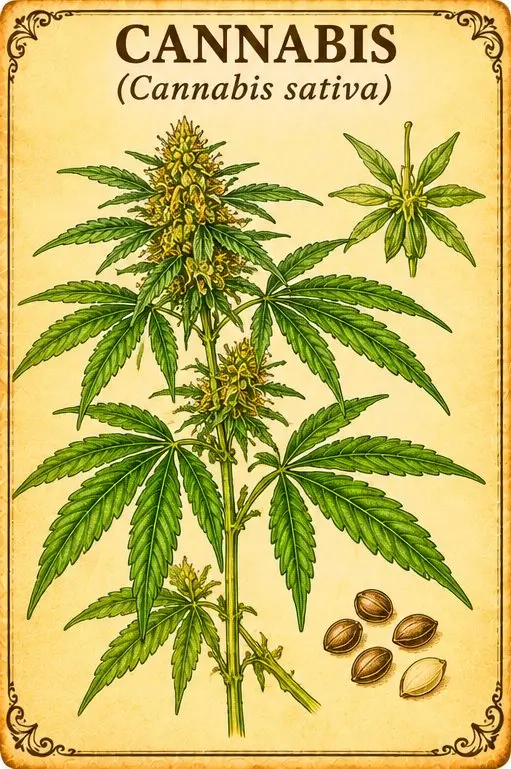
The cannabis plant. Purified cannabinoid drugs are approved for rare epilepsy and chemotherapy nausea; evidence for pain is modest.
Safety at a glance
- Pregnancy1 note →
- BreastfeedingNothing recorded
- MedicinesNothing recorded
- Who should avoid itNothing recorded
- AllergiesNothing recorded
- ToxicityNothing recorded
Tap a box to read the safety notes below. “Nothing recorded” means our sources don't cover it, not that it's safe.
What is Cannabis?
- Plant family
- Cannabaceae, the hemp family, which includes hops
- Parts used
- The flowers, leaves and their extracts
- Genus
- Cannabis
- Species
- sativa
Also called
Marijuana, Hemp, CBD
Traditionally used for
- Epilepsy and chemo nausea (approved drugs)
- Chronic pain
Traditionally described as
- Contains THC and CBD
Health topics
Where Cannabis appears in symptom search, and why. Being listed doesn't mean it's a proven treatment.
- Cancer Research
Lab and animal studies only: a CBD-rich extract slowed colon cancer. Not tested against cancer in people.
Safety
Side effects
Cannabis use has been linked to a higher risk of car crashes, injuries in older adults, dizziness on standing up, and, especially with frequent use, schizophrenia or other psychoses in people prone to them. Some people develop cannabis use disorder; teenagers are four to seven times more likely than adults to.[1]Health agency
Pregnancy
Smoking cannabis during pregnancy has been linked to lower birth weight.[1]Health agency
Depends on how it's prepared
Products containing THC or CBD can't legally be sold as dietary supplements in the U.S. The FDA has warned people not to use vaping products that contain THC.[1]Health agency
What does the research say?
Laboratory & animal research
Lab and animal results show what might be worth studying in people. They don't show that the herb has these effects in humans.
In cell and animal studies, a cannabis extract high in CBD slowed colon cancer.[2]Study
Research in people
A 2018 review of 47 studies of cannabis or cannabinoids for long-term pain (not cancer pain) found a small benefit: 29% of people had their pain reduced by 30%, compared with 26% on placebo. Side effects were more common with cannabis.[1]Health agency
The FDA hasn't approved the cannabis plant for any medical use, but it has approved drugs made from single cannabinoids:
- a purified CBD medicine for two rare, severe forms of epilepsy
- synthetic THC-type drugs for nausea and vomiting from chemotherapy, and for appetite and weight loss in HIV/AIDS
Some evidence suggests modest benefits for chronic pain and multiple sclerosis symptoms. Cannabis doesn't help glaucoma.[1]Health agency
In short
Linked to crashes, psychosis and use disorder; not in pregnancy.
Sources
- [1] Cannabis (Marijuana) and Cannabinoids: What You Need To Know — National Center for Complementary and Integrative Health (NCCIH), NIHGovernment health agency
- [2] Recent advances in anticancer approach of traditional medicinal plants: A novel strategy for cancer chemotherapy · DOI: 10.1016/j.ipha.2024.02.001Peer-reviewed study
This information is educational and traditional in nature, and is not a substitute for professional medical advice. Unfamiliar word? See what these words mean.