
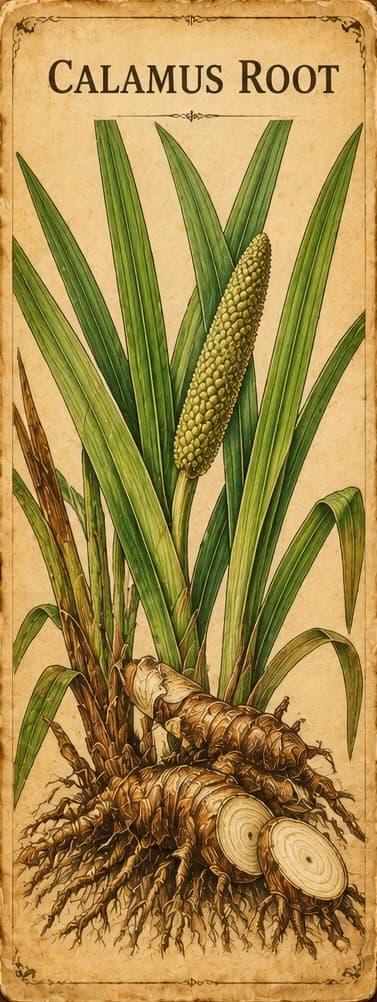
Calamus Root
Acorus calamus
The root of sweet flag, a marsh plant used in traditional medicine around the world for stomach cramps and asthma. It contains beta-asarone, which caused cancer in animal studies; adding it to food is banned in the US.
Safety at a glance
- PregnancyNothing recorded
- BreastfeedingNothing recorded
- MedicinesNothing recorded
- Who should avoid it1 note →
- AllergiesNothing recorded
- Toxicity1 note →
Tap a box to read the safety notes below. “Nothing recorded” means our sources don't cover it, not that it's safe.
What is Calamus Root?
- Plant family
- Acoraceae, the sweet flag family
- Parts used
- The underground stem (rhizome), often called the root
- Genus
- Acorus
- Species
- calamus
Also called
Sweet Flag, Calamus
Traditionally used for
- Stomach cramps (traditional)
- Dysentery (traditional)
- Asthma (traditional)
- Worms (traditional)
Traditionally described as
How it's prepared
Common ways Calamus Root is prepared or sold. This isn't advice on how to take it; see Safety below.
Safety
Who should avoid it
In the US, food with any added calamus, calamus oil or calamus extract is illegal. It was banned in 1968.[2]Health agency
Toxicity testing
Calamus contains asarone, which caused cancer in animal studies. The European Medicines Agency says the amount in herbal medicines should be kept as low as possible.
How much a plant contains depends on its variety: one variety had none in testing, while others contain small or large amounts. The agency says the variety without it should always be preferred.[3]Health agency
Technical detail: β-asarone in dried rhizome: not detected (diploid var. americanus), 0.3% (triploid var. calamus), 4.4–8.3% (tetraploid var. angustatus). Temporary limit about 115 µg/day (about 2 µg/kg body weight/day) until a full benefit/risk assessment.
What does the research say?
Traditional use
These are traditional uses, not proven treatments.
Calamus root is used widely in traditional medicine around the world. Reported uses include:
- Stomach cramps
- Dysentery (bloody diarrhea)
- Asthma
- Getting rid of worms
- As a tonic and stimulant
- As an insecticide
Laboratory & animal research
Lab and animal results show what might be worth studying in people. They don't show that the herb has these effects in humans.
In animal studies, asarone, a natural chemical in calamus, damaged genes and caused liver cancer in rodents. In rats it also slowed blood clotting and made them drowsy.[3]Health agency
Technical detail: α- and β-asarone are genotoxic and hepatocarcinogenic in rodents; β-asarone showed anticoagulant effects in mice and rats and sedative and hypothermic effects in rats.
In short
Contains beta-asarone, which caused cancer in rodents; calamus is banned as a food ingredient in the US.
Sources
- [1] Experimental evidence for use of Acorus calamus (asarone) for cancer chemoprevention · DOI: 10.1016/j.heliyon.2019.e01585Peer-reviewed study
- [2] 21 CFR 189.110: Calamus and its derivatives (substances prohibited from use in human food) — US Food and Drug Administration (Code of Federal Regulations)Government health agency
- [3] Public statement on the use of herbal medicinal products containing asarone — European Medicines Agency (EMEA), Committee on Herbal Medicinal ProductsGovernment health agency
This information is educational and traditional in nature, and is not a substitute for professional medical advice. Unfamiliar word? See what these words mean.