
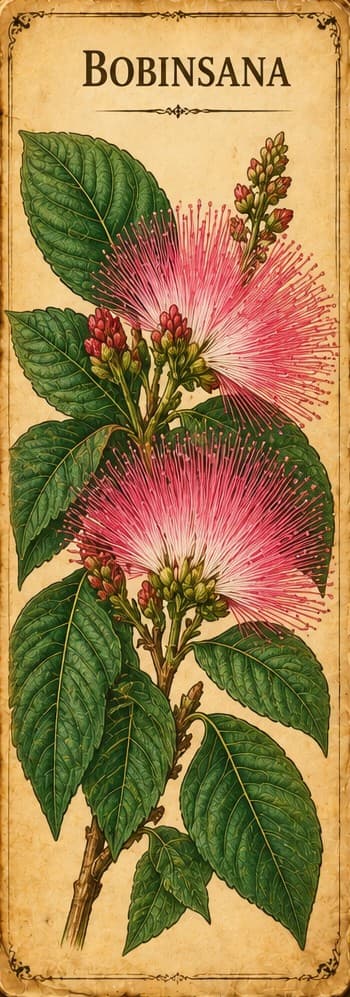
Bobinsana
Calliandra angustifolia
A small Amazonian riverbank tree with pink powder-puff flowers. Indigenous communities use it for tiredness, stomach aches and bites, and it's one of the "teacher plants" used alongside ayahuasca. It has barely been studied.
Safety at a glance
- PregnancyNothing recorded
- BreastfeedingNothing recorded
- MedicinesNothing recorded
- Who should avoid itNothing recorded
- AllergiesNothing recorded
- ToxicityNothing recorded
Tap a box to read the safety notes below. “Nothing recorded” means our sources don't cover it, not that it's safe.
What is Bobinsana?
- Plant family
- Fabaceae, the pea and bean family
- Parts used
- The bark and other parts
- Where it grows
- The Amazon region of South America
- Genus
- Calliandra
- Species
- angustifolia
Also called
Bobinzana
Traditionally used for
- Tiredness (traditional)
- Stomach ache (traditional)
- Bites (traditional)
- Ayahuasca ceremonies
Traditionally described as
What does the research say?
Traditional use
These are traditional uses, not proven treatments.
The Asháninka people of the Peruvian Amazon use bobinsana:
- For tiredness in older people and to strengthen them
- For stomach aches and as a laxative
- To strengthen newborn babies and help babies walk sooner
Kichwa communities in the Amazon use bobinsana for mosquito and animal bites.[2]Study
Bobinsana is one of many "teacher" or "master" plants often used with ayahuasca in Amazonian healing and self-development practices.[3]Study
Laboratory & animal research
Lab and animal results show what might be worth studying in people. They don't show that the herb has these effects in humans.
In a rat study, an alcohol-based extract of bobinsana bark didn't reduce swelling.[4]Study
In short
Its safety hasn't been studied.
Sources
- [1] Asháninka medicinal plants: a case study from the native community of Bajo Quimiriki, Junín, Peru · DOI: 10.1186/1746-4269-6-21Peer-reviewed study
- [2] In Silico Research of New Therapeutics Rotenoids Derivatives against Leishmania amazonensis Infection · DOI: 10.3390/biology11010133Peer-reviewed study
- [3] N,N-dimethyltryptamine and Amazonian ayahuasca plant medicine · DOI: 10.1002/hup.2835Peer-reviewed study
- [4] Database survey of anti-inflammatory plants in South America: a review · DOI: 10.3390/ijms12042692Peer-reviewed study
This information is educational and traditional in nature, and is not a substitute for professional medical advice. Unfamiliar word? See what these words mean.