
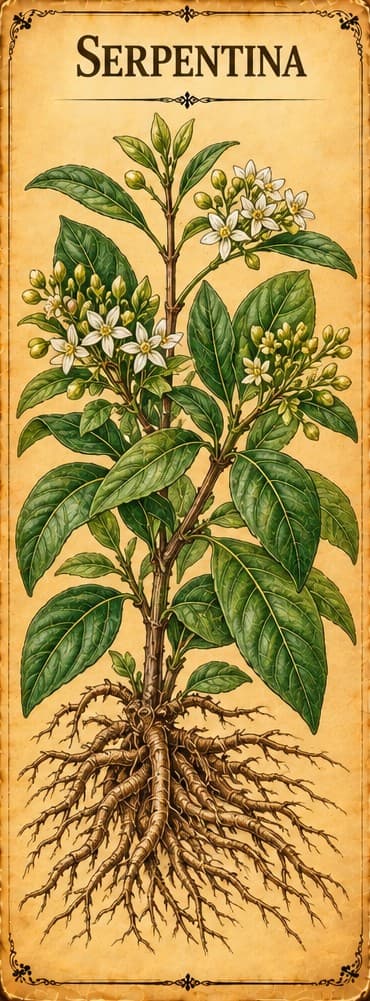
Serpentina
Rauvolfia serpentina
Indian snakeroot, the root that gave the blood pressure medicine reserpine. Doctors used it widely for high blood pressure in the 1940s and 1950s until side effects, especially depression, made it fall out of favour.
Safety at a glance
- PregnancyNothing recorded
- BreastfeedingNothing recorded
- MedicinesNothing recorded
- Who should avoid itNothing recorded
- AllergiesNothing recorded
- ToxicityNothing recorded
Tap a box to read the safety notes below. “Nothing recorded” means our sources don't cover it, not that it's safe.
What is Serpentina?
- Plant family
- Apocynaceae, the dogbane and milkweed family
- Parts used
- The root
- Genus
- Rauvolfia
- Species
- serpentina
Also called
Indian Snakeroot, Rauwolfia, Serpentine
Traditionally used for
- High blood pressure (historical)
- Source of reserpine
Traditionally described as
- Lowers blood pressure (reserpine)
Health topics
Where Serpentina appears in symptom search, and why. Being listed doesn't mean it's a proven treatment.
- High Blood Pressure
Its compound reserpine lowered systolic blood pressure by about 8 points in a Cochrane review, but it can cause depression. Don't use it without your doctor.
How it's prepared
Common ways Serpentina is prepared or sold. This isn't advice on how to take it; see Safety below.
- Powder
The root is used as the crude drug or as a powder.[1]Health agency
Safety
Side effects
Rauwolfia and reserpine have been linked to depression, which is why the plant fell out of use. Correct dosing and screening people for depression are considered important. Use it only under a doctor's supervision.[2]Study
What does the research say?
Traditional use
These are traditional uses, not proven treatments.
Doctors throughout India used rauwolfia root for high blood pressure in the 1940s, and in the 1950s it was used around the world, including in the US and Canada. It fell out of favour when side effects, including depression and a suspected cancer link, were reported.[2]Study
Research in people
Reserpine, the main blood pressure-lowering compound from the root, is a medicine in its own right. A Cochrane review of 4 trials with 237 people found reserpine lowered the top number (systolic blood pressure) by about 8 points compared with a dummy pill. The trials were small and varied, so effects on other measures were unclear.[3]Review or trial
Technical detail: weighted mean difference in SBP −7.92 mmHg (95% CI −14.05 to −1.78).
A 2015 review argued that low doses of rauwolfia, given to carefully chosen patients alongside standard medicines, can treat high blood pressure safely, and disputed the link to cancer. This is one author's view.[2]Study
In short
Linked to depression; use only under a doctor's supervision.
Sources
- [1] WHO monographs on selected medicinal plants, Volume 1 — "Radix Rauwolfiae" monograph — World Health OrganizationGovernment health agency
- [2] Rauwolfia in the Treatment of HypertensionPeer-reviewed study
- [3] Blood pressure-lowering efficacy of reserpine for primary hypertension · DOI: 10.1002/14651858.CD007655.pub3Review or clinical trial
This information is educational and traditional in nature, and is not a substitute for professional medical advice. Unfamiliar word? See what these words mean.