
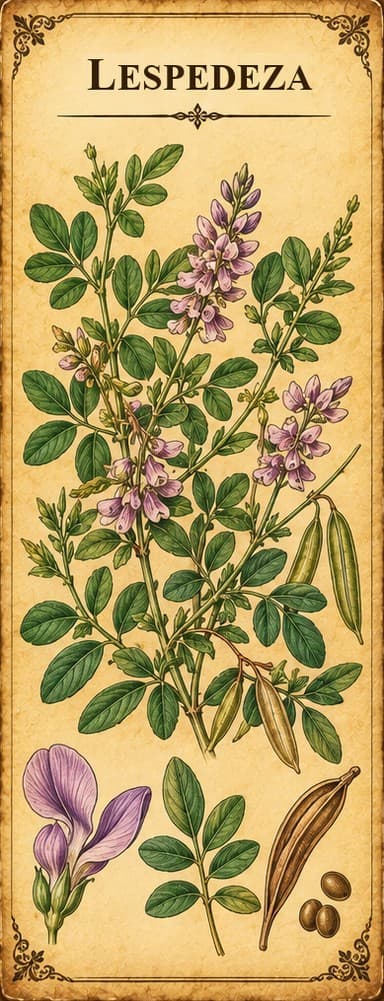
Lespedeza
Lespedeza spp.
Bush clover, a group of about 40 plants used in East Asian folk medicine for skin rashes, inflammation and the liver. Research so far is in the lab.
Safety at a glance
- PregnancyNothing recorded
- BreastfeedingNothing recorded
- MedicinesNothing recorded
- Who should avoid itNothing recorded
- AllergiesNothing recorded
- ToxicityNothing recorded
Tap a box to read the safety notes below. “Nothing recorded” means our sources don't cover it, not that it's safe.
What is Lespedeza?
- Plant family
- Fabaceae, the pea and bean family
- Parts used
- The leaves, stems and flowering tops
- Where it grows
- About 40 species in temperate and subtropical regions, mostly East Asia and North America
- Genus
- Lespedeza
- Species
- spp.
Also called
Bush Clover, Lespedeza cuneata, Lespedeza bicolor, Lespedeza capitata
Traditionally used for
- Skin rashes (traditional)
- Liver support (traditional)
- Kidney supplements (unproven)
Traditionally described as
- Antioxidant (in lab studies)
What does the research say?
Traditional use
These are traditional uses, not proven treatments.
Lespedeza species have been used in folk medicine for centuries, especially in East Asia. In Korea and Japan they're used for skin rashes, inflammatory conditions and to support the liver. Some species are also used to calm the gut and as a mild laxative. Round-headed bush clover (Lespedeza capitata) is sold in over-the-counter supplements for kidney health, based on a supposed ability to reduce inflammation in the kidneys; this hasn't been proven in people.[1]Study
Laboratory & animal research
Lab and animal results show what might be worth studying in people. They don't show that the herb has these effects in humans.
Lespedeza plants are rich in plant compounds such as quercetin, rutin and catechin. In lab studies, extracts acted as antioxidants, lowered inflammation signals in immune cells, blocked the build-up of sugar-damaged proteins linked to diabetes, and slowed or killed some cancer cells. Chinese bush clover (L. cuneata) showed the strongest antioxidant activity of the species compared. These effects haven't been tested in people.[1]Study
Technical detail: L. cuneata DPPH IC50 20–25 µg/mL; L. bicolor inhibited advanced glycation end-product formation; reduced TNF-α and IL-6 via NF-κB in macrophage models.
In short
Not tested in people.
Sources
- [1] Comparative Analysis of Lespedeza Species: Traditional Uses and Biological Activity of the Fabaceae Family · DOI: 10.3390/molecules30092013Peer-reviewed study
This information is educational and traditional in nature, and is not a substitute for professional medical advice. Unfamiliar word? See what these words mean.