
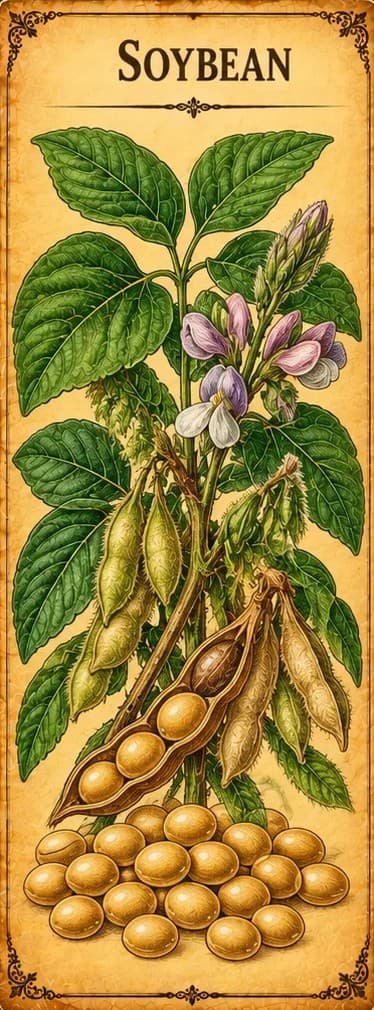
Soybean
Glycine max
A bean long grown in Asia and eaten as tofu, miso, tempeh, edamame and soy milk. Soy protein may lower cholesterol slightly, and isoflavones may ease hot flashes a little.
Safety at a glance
- Pregnancy1 note →
- BreastfeedingNothing recorded
- Medicines1 note →
- Who should avoid itNothing recorded
- Allergies1 note →
- ToxicityNothing recorded
Tap a box to read the safety notes below. “Nothing recorded” means our sources don't cover it, not that it's safe.
Soybean may interact with some medicines. If you take any medicine, read Interactions with medicines below and talk to your doctor or pharmacist before using it.
What is Soybean?
- Plant family
- Fabaceae, the pea and bean family
- Parts used
- The beans (seeds)
- Where it grows
- Long cultivated in Asia; now also grown elsewhere, including the United States
- Genus
- Glycine
- Species
- max
Also called
Soy
Traditionally used for
- Food
- Cholesterol (soy protein)
- Menopause hot flashes (small effect)
- Bone density after menopause
Traditionally described as
- Contains isoflavones (plant estrogens)
Health topics
Where Soybean appears in symptom search, and why. Being listed doesn't mean it's a proven treatment.
- High Blood Pressure
Soy isoflavones may lower blood pressure a little.
- High Cholesterol
Eating soy protein instead of other proteins may lower cholesterol slightly.
- Menopause Symptoms
Soy isoflavones or protein may ease hot flashes a little; results vary.
How it's prepared
Common ways Soybean is prepared or sold. This isn't advice on how to take it; see Safety below.
- Capsule
Soy is also sold as dietary supplements containing soy protein, isoflavones or other parts of the bean.[1]Health agency
- Culinary Preparation
Common soy foods include tofu, miso, tempeh, edamame and soy milk.[1]Health agency
Safety
Interactions with medicines
Soy foods high in tyramine, such as tofu and soy sauce, have caused dangerously high blood pressure in people taking MAO inhibitors, a group of antidepressants.[1]Health agency
Allergies
Some people are allergic to soy. In the US, soy must be listed on the label of packaged foods and dietary supplements.[1]Health agency
Side effects
Soy can cause bloating, constipation, diarrhea and nausea. In studies, soy protein supplements were used safely for up to 16 weeks and concentrated isoflavone extracts for up to 6 months.[1]Health agency
Pregnancy
Soy may be unsafe during pregnancy in amounts larger than those found in food. Little is known about larger amounts while breastfeeding.[1]Health agency
What does the research say?
Traditional use
These are traditional uses, not proven treatments.
Soybeans have long been grown in Asia. Today soy is promoted for high cholesterol, high blood pressure, diabetes, menopause symptoms and many other conditions.[1]Health agency
Research in people
Research in people suggests:
- Cholesterol: eating soy protein instead of other proteins may lower cholesterol slightly; soy isoflavones may not
- Hot flashes: isoflavone supplements or soy protein may make menopausal hot flashes less frequent and severe, but the effect may be small and results vary
- Bones: isoflavones probably help bone density after menopause
- Blood pressure: isoflavones may lower it a little
- Diabetes: diets high in soy may be linked to a lower risk of type 2 diabetes; it's unclear whether soy helps blood sugar control in people who already have it
- Memory and thinking: studies conflict
In observational studies, Asian and Asian-American women who eat more soy have a lower risk of breast cancer. Western diets may contain too little soy to see this effect, and soy supplements haven't been shown to lower breast cancer risk.[1]Health agency
In short
Soy is a common allergen. Tofu and soy sauce can interact with MAO inhibitor antidepressants.
Sources
- [1] Soy: Usefulness and Safety — National Center for Complementary and Integrative Health (NIH)Government health agency
This information is educational and traditional in nature, and is not a substitute for professional medical advice. Unfamiliar word? See what these words mean.