
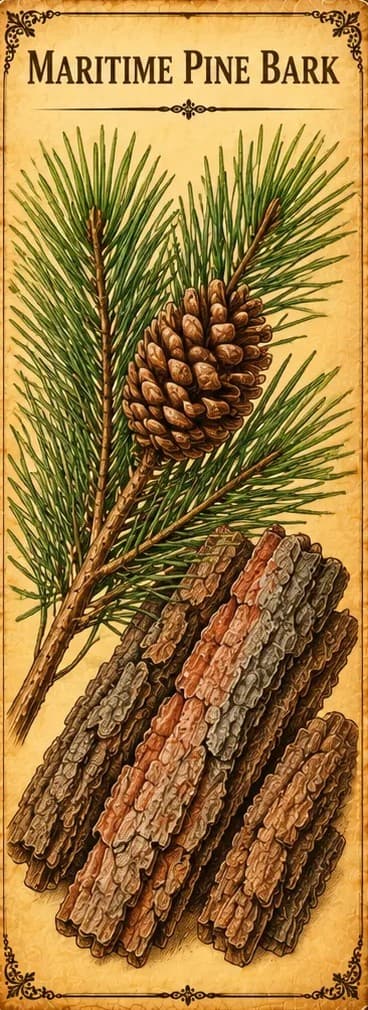
Maritime Pine Bark
Pinus pinaster
The bark of the French maritime pine, sold as the extract Pycnogenol. A Cochrane review found too little evidence to support it for any long-term condition.
Safety at a glance
- PregnancyNothing recorded
- BreastfeedingNothing recorded
- MedicinesNothing recorded
- Who should avoid itNothing recorded
- AllergiesNothing recorded
- ToxicityNothing recorded
Tap a box to read the safety notes below. “Nothing recorded” means our sources don't cover it, not that it's safe.
What is Maritime Pine Bark?
- Plant family
- Pinaceae, the pine family
- Parts used
- The bark, as an extract
- Genus
- Pinus
- Species
- pinaster
Also called
Pycnogenol, French Maritime Pine Bark
Traditionally used for
- Many conditions promoted (not proven)
Traditionally described as
- Standardized to 70% procyanidins (antioxidants)
How it's prepared
Common ways Maritime Pine Bark is prepared or sold. This isn't advice on how to take it; see Safety below.
- Extract
It's sold as a standardized bark extract (Pycnogenol) in dietary supplements.[1]Review or trial
What does the research say?
Laboratory & animal research
Lab and animal results show what might be worth studying in people. They don't show that the herb has these effects in humans.
Pycnogenol, the best-known maritime pine bark extract, is standardized to contain 70% procyanidins, compounds that act as strong antioxidants. It's sold as a supplement for many long-term conditions.[1]Review or trial
Research in people
A 2012 Cochrane review of 15 trials with 791 people looked at Pycnogenol for seven conditions: asthma, ADHD, poor leg vein circulation, diabetes, erectile dysfunction, high blood pressure and osteoarthritis. The trials were small and varied, and some had a risk of bias, so the reviewers concluded there isn't enough evidence to support it for any long-term condition, or to judge its safety.[1]Review or trial
In short
Not enough evidence to judge its safety.
Sources
- [1] Pycnogenol® (extract of French maritime pine bark) for the treatment of chronic disorders · DOI: 10.1002/14651858.CD008294.pub4Review or clinical trial
This information is educational and traditional in nature, and is not a substitute for professional medical advice. Unfamiliar word? See what these words mean.