
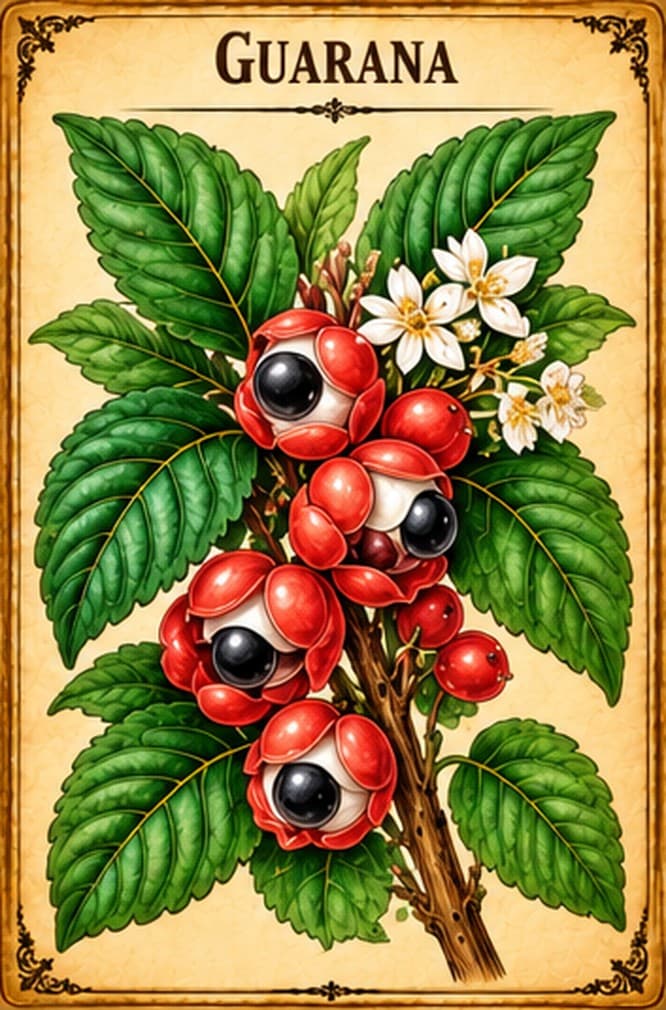
Guarana
Paullinia cupana
An Amazonian plant whose caffeine-rich seeds are used for energy. Studies on cancer-related tiredness disagree.
Safety at a glance
- PregnancyNothing recorded
- BreastfeedingNothing recorded
- Medicines1 note →
- Who should avoid itNothing recorded
- AllergiesNothing recorded
- ToxicityNothing recorded
Tap a box to read the safety notes below. “Nothing recorded” means our sources don't cover it, not that it's safe.
Guarana may interact with some medicines. If you take any medicine, read Interactions with medicines below and talk to your doctor or pharmacist before using it.
What is Guarana?
- Plant family
- Sapindaceae, the soapberry family
- Parts used
- The seeds
- Genus
- Paullinia
- Species
- cupana
Also called
Brazilian Cocoa
Traditionally used for
- Energy
- Fatigue
Traditionally described as
- Seeds
- contains caffeine
Health topics
Where Guarana appears in symptom search, and why. Being listed doesn't mean it's a proven treatment.
- Fatigue
A 2024 review found it reduced cancer-related tiredness, but studies disagreed.
Natural compounds
How it's prepared
Common ways Guarana is prepared or sold. This isn't advice on how to take it; see Safety below.
- Capsule
Sold as tablets and capsules.[1]General reference
- Powder
Also sold as a powder.[1]General reference
Safety
Interactions with medicines
Guarana may raise bleeding risk with blood thinners such as warfarin. Taking it with other stimulants may not be safe. Talk with a health care provider first.[1]General reference
Side effects
Guarana can cause nausea and trouble sleeping. High amounts can cause vomiting, heartbeat changes, high blood pressure and seizures. Fast heartbeat and seizures have been reported with guarana supplements and energy drinks.[1]General reference
What does the research say?
Traditional use
These are traditional uses, not proven treatments.
Guarana seeds have traditionally been used for fevers, headaches and dysentery. Today guarana is promoted to boost energy, ease tiredness and reduce hunger.[1]General reference
Laboratory & animal research
Lab and animal results show what might be worth studying in people. They don't show that the herb has these effects in humans.
Guarana seeds contain caffeine and related chemicals, and many of its effects are put down to caffeine. Lab studies suggest antioxidant and nerve-protecting effects, and that it can make blood platelets less sticky.[1]General reference
Research in people
Small studies suggest guarana might help tiredness caused by chemotherapy, but it didn't help tiredness after radiation or in people with head and neck cancer, and one earlier review found it worked no better than a placebo for cancer-related tiredness.[1]General reference
A 2024 review of 5 studies with 229 people with cancer found guarana reduced cancer-related tiredness, but results varied a lot between studies. The authors say larger trials are needed.[2]Review or trial
Technical detail: SMD −0.77 (95% CI −1.34 to −0.21); I² = 78%.
In short
Contains caffeine: can cause trouble sleeping, a fast heartbeat and, in high amounts, seizures. May raise bleeding risk with blood thinners.
Sources
- [1] Guarana — About Herbs, Botanicals & Other Products — Memorial Sloan Kettering Cancer CenterGeneral reference
- [2] Natural supplementation to effectively treat cancer-induced fatigue: evidence of a meta-analysis on the use of guaraná · DOI: 10.1590/1806-9282.20240528Review or clinical trial
This information is educational and traditional in nature, and is not a substitute for professional medical advice. Unfamiliar word? See what these words mean.