
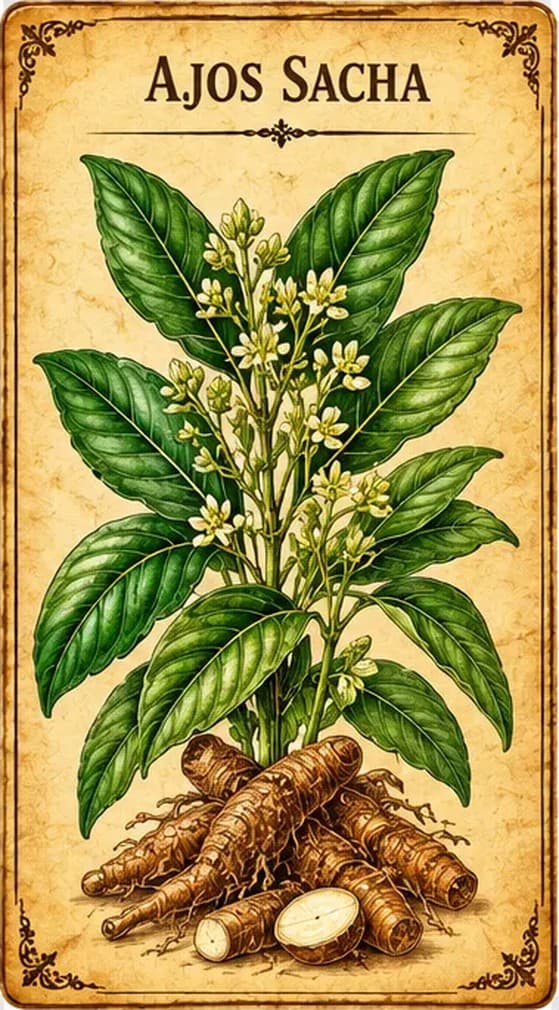
Ajos Sacha
Mansoa alliacea
A vine used in Ecuador for pain, fever, colds and more. It has only been studied in the lab and in mice.
Safety at a glance
- PregnancyNothing recorded
- BreastfeedingNothing recorded
- MedicinesNothing recorded
- Who should avoid itNothing recorded
- AllergiesNothing recorded
- ToxicityNothing recorded
Tap a box to read the safety notes below. “Nothing recorded” means our sources don't cover it, not that it's safe.
What is Ajos Sacha?
- Plant family
- Bignoniaceae, the trumpet-creeper family
- Parts used
- The root, stem, leaves and flowers
- Genus
- Mansoa
- Species
- alliacea
Regional names
Ajo de Monte, Sacha Ajo, Cipó-alho, Bejuco de Ajo
Traditionally used for
- Pain
- Fever
- Colds
Traditionally described as
- Root
- stem
- leaves and flowers
What does the research say?
Traditional use
These are traditional uses, not proven treatments.
In Ecuador, ajos sacha has traditionally been used for headache, stomach pain, joint and muscle pain, fever, cough, colds, infections, tiredness, anemia, nausea and constipation, as a purgative, for blood pressure and as an insect repellent. It was one of 14 plants chosen for Ecuador's national herbal pharmacopoeia project.[1]Study
Laboratory & animal research
Lab and animal results show what might be worth studying in people. They don't show that the herb has these effects in humans.
Lab studies suggest antioxidant, antimicrobial, antifungal and antiparasitic effects. So far its effects have only been checked in the lab, not in people.[1]Study
In mice with long-lasting inflammatory pain, an extract of the plant reduced pain sensitivity, apparently through the body's opioid receptors, but didn't reduce swelling. It's popularly used for pain.[2]Study
In short
No safety studies found.
Sources
- [1] The herbal pharmacopoeia of Ecuador: a national model for integrating traditional knowledge and biodiscovery · DOI: 10.3389/fphar.2025.1662980Peer-reviewed study
- [2] Mansoa alliacea extract presents antinociceptive effect in a chronic inflammatory pain model in mice through opioid mechanisms · DOI: 10.1016/j.neuint.2018.11.017Peer-reviewed study
This information is educational and traditional in nature, and is not a substitute for professional medical advice. Unfamiliar word? See what these words mean.