
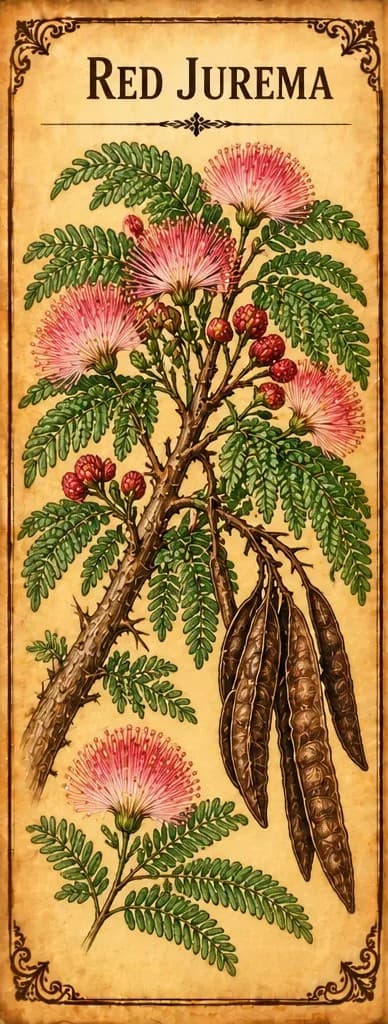
Red Jurema
Mimosa ophthalmocentra
A thorny tree of northeastern Brazil whose bark is used for coughs and bronchitis. Its roots contain DMT and have been used by Indigenous peoples to make a hallucinogenic ceremonial drink.
Safety at a glance
- PregnancyNothing recorded
- BreastfeedingNothing recorded
- MedicinesNothing recorded
- Who should avoid itNothing recorded
- AllergiesNothing recorded
- Toxicity1 note →
Tap a box to read the safety notes below. “Nothing recorded” means our sources don't cover it, not that it's safe.
What is Red Jurema?
- Plant family
- Fabaceae, the pea and bean family
- Parts used
- The bark and roots
- Where it grows
- The Caatinga dry forests of northeastern Brazil
- Genus
- Mimosa
- Species
- ophthalmocentra
Regional names
Jurema-Vermelha, Jurema
Traditionally used for
- Coughs
- Bronchitis
- Religious ceremonies
Traditionally described as
- Hallucinogenic (roots)
Natural compounds
Safety
Toxicity testing
The roots contain DMT, a powerful hallucinogen. No studies of its safety as a remedy were found.[1]Study
What does the research say?
Traditional use
These are traditional uses, not proven treatments.
Laboratory & animal research
Lab and animal results show what might be worth studying in people. They don't show that the herb has these effects in humans.
The roots contain DMT, a powerful hallucinogen, along with two related compounds, N-methyltryptamine and hordenine. The authors say this fits its ceremonial use.[1]Study
In short
The roots contain the hallucinogen DMT, and no safety studies exist.
Sources
- [1] Isolation and Identification of Putative Hallucinogenic Constituents from the Roots of Mimosa ophthalmocentra · DOI: 10.1076/phbi.37.1.50.6312Peer-reviewed study
- [2] A Comprehensive Review of the Ethnotraditional Uses and Biological and Pharmacological Potential of the Genus Mimosa · DOI: 10.3390/ijms22147463Peer-reviewed study
This information is educational and traditional in nature, and is not a substitute for professional medical advice. Unfamiliar word? See what these words mean.