
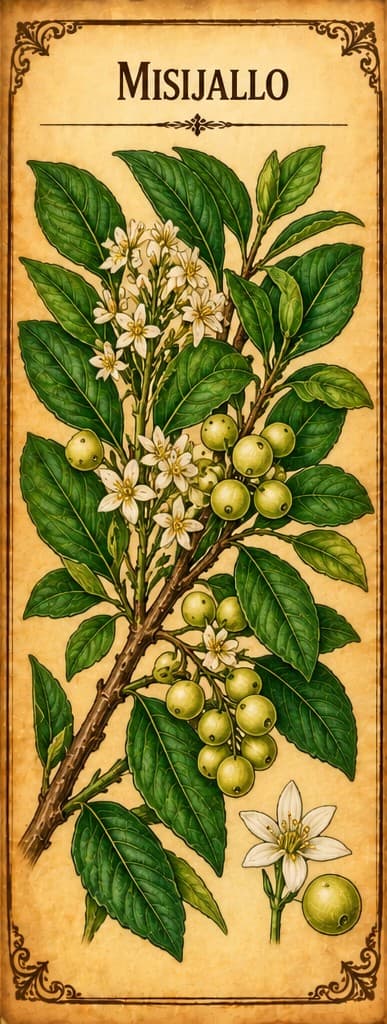
Misijallo
Gaultheria insipida
An Andean wintergreen relative whose berries have traditionally been gathered and eaten. Its medicinal use hasn't been studied.
Safety at a glance
- PregnancyNothing recorded
- BreastfeedingNothing recorded
- MedicinesNothing recorded
- Who should avoid itNothing recorded
- AllergiesNothing recorded
- ToxicityNothing recorded
Tap a box to read the safety notes below. “Nothing recorded” means our sources don't cover it, not that it's safe.
What is Misijallo?
- Plant family
- Ericaceae, the heather family
- Parts used
- The berries
- Where it grows
- The Andes of South America
- Genus
- Gaultheria
- Species
- insipida
Traditionally used for
- Edible berries
Traditionally described as
- Edible
What does the research say?
Traditional use
These are traditional uses, not proven treatments.
The berries of Gaultheria insipida have traditionally been gathered and eaten, fresh or dried. Across the genus, berries were eaten while foraging, kept as survival food and made into porridges, preserves and fermented drinks.[1]Study
Gaultheria berries in general are used in folk medicine for fever, pain, inflammation and digestive problems. In the Andes, they were also part of ceremonial foods and harvest offerings. No uses specific to this species were found.[1]Study
Laboratory & animal research
Lab and animal results show what might be worth studying in people. They don't show that the herb has these effects in humans.
Gaultheria fruits contain polyphenols, including salicylate-like compounds, that showed antioxidant activity in lab studies and may help reduce inflammation. This species itself hasn't been studied.[1]Study
In short
No safety or medicinal studies of this species were found.
Sources
- [1] Gaultheria Berries as Potential Functional Foods: Phytochemical Composition, Health-Promoting Properties, and Nutritional Potential · DOI: 10.3390/nu18183015Peer-reviewed study
This information is educational and traditional in nature, and is not a substitute for professional medical advice. Unfamiliar word? See what these words mean.