
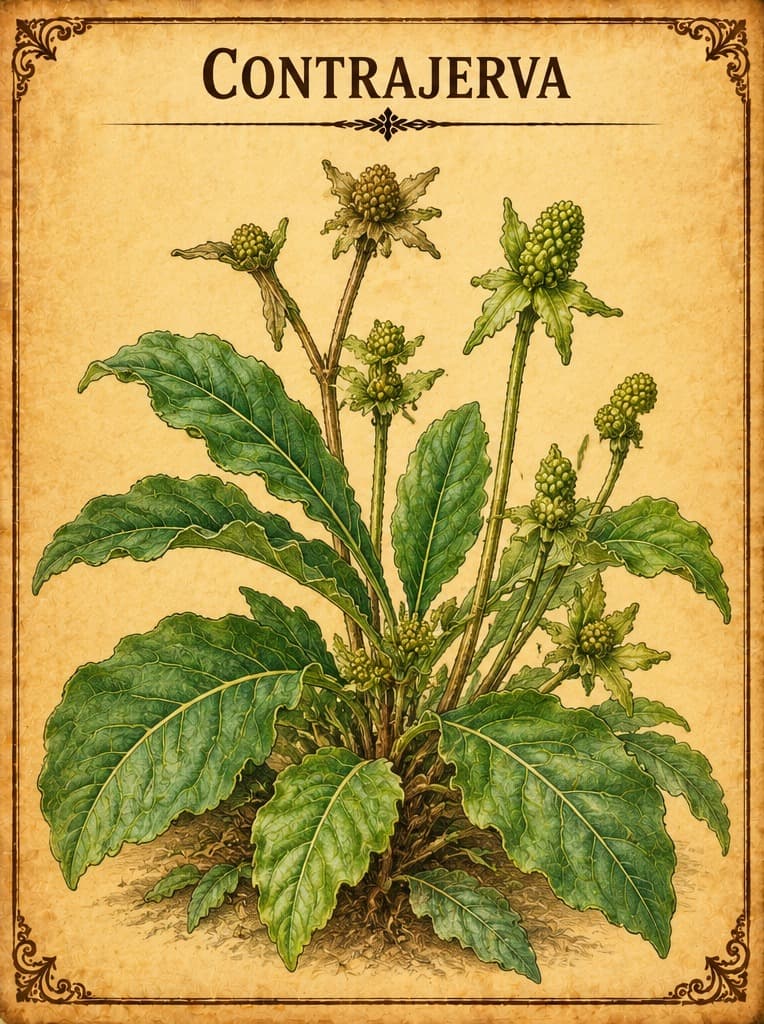
Contrajerva
Dorstenia contrajerva
A small fig relative from tropical America, one of the most commonly reported traditional snakebite remedies in Central America. Its effects haven't been tested in people.
Safety at a glance
- PregnancyNothing recorded
- BreastfeedingNothing recorded
- MedicinesNothing recorded
- Who should avoid itNothing recorded
- AllergiesNothing recorded
- Toxicity1 note →
Tap a box to read the safety notes below. “Nothing recorded” means our sources don't cover it, not that it's safe.
What is Contrajerva?
- Plant family
- Moraceae, the fig and mulberry family
- Parts used
- The rhizome (underground stem) and roots
- Where it grows
- Mexico, Central America, the Caribbean and northern South America
- Genus
- Dorstenia
- Species
- contrajerva
Regional names
Contrayerba
Traditionally used for
- Snakebites
Traditionally described as
- Traditional antidote
Safety
Toxicity testing
There's no clinical research on whether traditional snakebite remedies like this one work or are safe.[1]Review or trial
What does the research say?
Traditional use
These are traditional uses, not proven treatments.
Contrajerva is one of the plants most often reported as a snakebite remedy in Central America. Of 208 species used for snakebite there, it was one of only nine reported in at least three separate studies.[1]Review or trial
Laboratory & animal research
Lab and animal results show what might be worth studying in people. They don't show that the herb has these effects in humans.
Contrajerva was one of four Yucatán medicinal plants tested in the lab against the Leishmania parasites that cause skin sores. Its extracts weren't among the most active.[2]Study
In short
There's no clinical evidence that it works for snakebite or is safe.
Sources
- [1] Medicinal plants used to treat snakebite in Central America: Review and assessment of scientific evidence · DOI: 10.1016/j.jep.2017.02.011Review or clinical trial
- [2] Leishmanicidal activity of Yucatecan medicinal plants on Leishmania species responsible for cutaneous leishmaniasis · DOI: 10.1645/GE-1675.1Peer-reviewed study
This information is educational and traditional in nature, and is not a substitute for professional medical advice. Unfamiliar word? See what these words mean.