
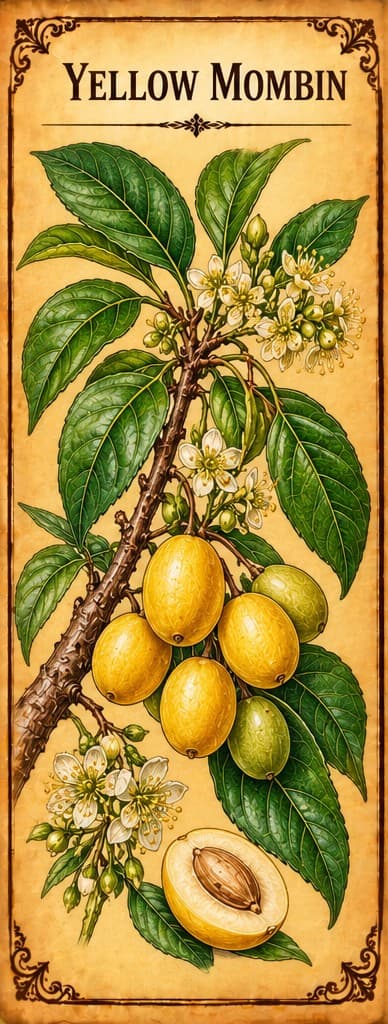
Yellow Mombin
Spondias mombin
A tropical tree with tart yellow fruit (taperebá or cajá in Brazil), used in folk medicine for digestive problems, fever and wounds. The fruit is rich in antioxidants; medicinal effects have only been studied in animals.
Safety at a glance
- Pregnancy1 note →
- BreastfeedingNothing recorded
- MedicinesNothing recorded
- Who should avoid itNothing recorded
- AllergiesNothing recorded
- ToxicityNothing recorded
Tap a box to read the safety notes below. “Nothing recorded” means our sources don't cover it, not that it's safe.
What is Yellow Mombin?
- Plant family
- Anacardiaceae, the cashew and mango family
- Parts used
- The fruit, leaves, flowers, seeds and stem bark
- Where it grows
- The tropical Americas; also grown in West Africa and other tropical regions
- Genus
- Spondias
- Species
- mombin
Also called
Hog Plum
Regional names
Taperebá, Cajá
Traditionally used for
- Diarrhea
- Constipation
- Fever
- Wounds
- Edible fruit
Traditionally described as
- Antioxidant
- May lower blood sugar (in animal studies)
Safety
Pregnancy
It's traditionally used to cause abortion.[1]Study
How much to use
The review's authors advise caution with the amount taken, and to follow medical advice.[1]Study
What does the research say?
Traditional use
These are traditional uses, not proven treatments.
Yellow mombin is used as an herbal medicine across the tropics, including in Africa. It's most often used for:
- constipation, diarrhea, dysentery and stomach pain
- fever
- wounds
- gonorrhea
- bleeding after childbirth
- to cause abortion
Laboratory & animal research
Lab and animal results show what might be worth studying in people. They don't show that the herb has these effects in humans.
About 102 compounds have been found in the leaves, fruit and bark. The Amazon fruit, called taperebá, is a source of vitamins, minerals and antioxidant phenolic compounds. In lab and animal studies, the fruit, leaves and seeds showed antioxidant activity, may help reduce inflammation, and had effects on blood sugar, cholesterol and mood.[2]Study
In diabetic rats, a leaf extract given for 28 days lowered blood sugar and cholesterol and raised insulin and HDL ("good") cholesterol.[3]Study
Technical detail: methanolic extract 125–500 mg/kg orally; streptozotocin model; compared with glibenclamide.
In short
It's traditionally used to cause abortion.
Sources
- [1] Nutritional benefits, ethnomedicinal uses, phytochemistry, pharmacological properties and toxicity of Spondias mombin Linn: a comprehensive review · DOI: 10.1093/jpp/rgac086Peer-reviewed study
- [2] Botanical, nutritional, phytochemical characteristics, and potential health benefits of murici (Byrsonima crassifolia) and taperebá (Spondias mombin): insights from animal and cell culture models · DOI: 10.1093/nutrit/nuad065Peer-reviewed study
- [3] Antidiabetic and Antihyperlipidemic Effects of Methanolic Extract of Leaves of Spondias mombin in Streptozotocin-Induced Diabetic Rats · DOI: 10.3389/fphys.2022.870399Peer-reviewed study
This information is educational and traditional in nature, and is not a substitute for professional medical advice. Unfamiliar word? See what these words mean.