
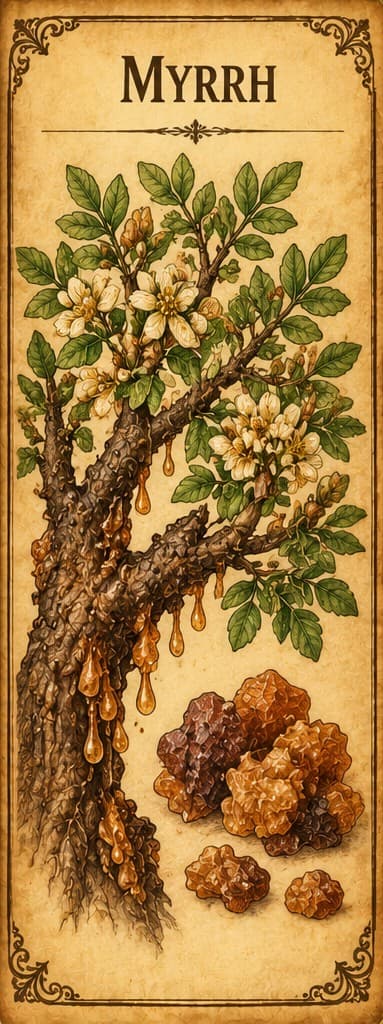
Myrrh
Commiphora myrrha
An aromatic gum resin from Africa and Arabia, recognized in Europe as a traditional remedy for mouth ulcers, mouth inflammation and minor wounds.
Safety at a glance
- PregnancyNothing recorded
- BreastfeedingNothing recorded
- MedicinesNothing recorded
- Who should avoid itNothing recorded
- Allergies1 note →
- ToxicityNothing recorded
Tap a box to read the safety notes below. “Nothing recorded” means our sources don't cover it, not that it's safe.
What is Myrrh?
- Plant family
- Burseraceae, the frankincense and myrrh family
- Parts used
- The gum resin that seeps from the bark
- Where it grows
- Northeastern Africa and the Arabian Peninsula
- Genus
- Commiphora
- Species
- myrrha
Older scientific names
Commiphora molmol
Traditionally used for
- Mouth ulcers
- Mouth inflammation
- Minor wounds
- Boils
Traditionally described as
- Aromatic resin
Safety
Allergies
Allergic skin reactions have been reported.[1]Health agency
Side effects
The alcohol in liquid myrrh can briefly sting or irritate the skin or the inside of the mouth.[1]Health agency
How much to use
Only for adults and children over 12. See a doctor if symptoms last more than a week or get worse.[1]Health agency
What does the research say?
Traditional use
These are traditional uses, not proven treatments.
In Europe, liquid myrrh preparations (made with alcohol) are recognized traditional remedies for:
- minor mouth ulcers and inflammation in the mouth
- minor wounds and small boils
They're put on the skin or inside the mouth. This is based on long-standing use (at least 30 years), not on clinical trials.[1]Health agency
In short
Can cause allergic skin reactions; only for people over 12.
Sources
- [1] Myrrh: summary for the public (EMA/164109/2019) — European Medicines Agency, Committee on Herbal Medicinal Products (HMPC)Government health agency
This information is educational and traditional in nature, and is not a substitute for professional medical advice. Unfamiliar word? See what these words mean.