
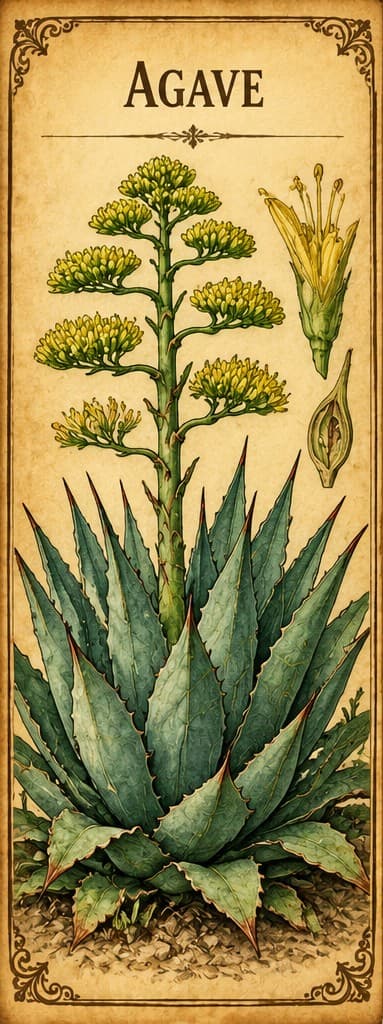
Agave
Agave americana
The century plant of Mexico, whose sap is fermented into pulque and whose cooked heart is used to make mezcal. Its fibers are made into cord and cloth.
Safety at a glance
- PregnancyNothing recorded
- BreastfeedingNothing recorded
- MedicinesNothing recorded
- Who should avoid itNothing recorded
- AllergiesNothing recorded
- ToxicityNothing recorded
Tap a box to read the safety notes below. “Nothing recorded” means our sources don't cover it, not that it's safe.
What is Agave?
- Plant family
- Asparagaceae, the asparagus family
- Parts used
- The sap, the stem (heart) and the leaf fibers
- Where it grows
- Mexico; now grown in warm, dry regions worldwide
- Genus
- Agave
- Species
- americana
Also called
Century Plant
Regional names
Maguey
Traditionally used for
- Food
- Pulque
- Mezcal
- Fiber
Traditionally described as
- Edible (cooked heart and sap)
What does the research say?
Traditional use
These are traditional uses, not proven treatments.
In Mexico, agave sap is fermented into the drink pulque. The stems have been eaten since prehistoric times, cooked in underground ovens, and the cooked stems are now fermented and distilled into mezcal. Fibers from some varieties are made into cord and cloth.[1]Study
In short
Its medicinal use hasn't been studied.
Sources
- [1] Use, management and domestication of Agave americana in Mexico · DOI: 10.1186/s13002-026-00924-2Peer-reviewed study
This information is educational and traditional in nature, and is not a substitute for professional medical advice. Unfamiliar word? See what these words mean.