
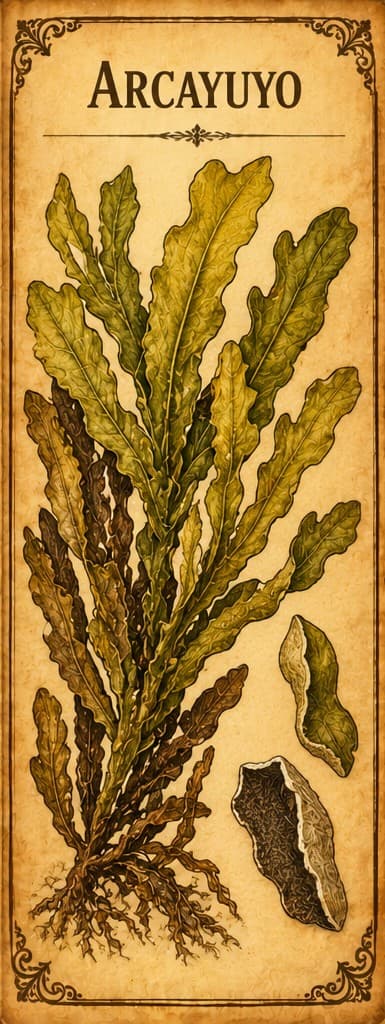
Arcayuyo
Dysphania graveolens
A strong-smelling relative of epazote, used in Mexico for stomach pain. It eased pain in mice, but its oil is poisonous and has killed a child.
Safety at a glance
- PregnancyNothing recorded
- BreastfeedingNothing recorded
- MedicinesNothing recorded
- Who should avoid itNothing recorded
- AllergiesNothing recorded
- Toxicity1 note →
Tap a box to read the safety notes below. “Nothing recorded” means our sources don't cover it, not that it's safe.
What is Arcayuyo?
- Plant family
- Amaranthaceae, the amaranth family
- Parts used
- The above-ground parts
- Where it grows
- Mexico and the southwestern United States to the Andes
- Genus
- Dysphania
- Species
- graveolens
Also called
Fetid Goosefoot
Regional names
Epazote de Zorrillo
Older scientific names
Chenopodium graveolens
Traditionally used for
- Stomach pain
Traditionally described as
- May relieve pain (in animal studies)
- Poisonous oil
Natural compounds
Safety
Toxicity testing
The oil from this plant can kill. A girl under 3 died after a healer gave her 40 mL of it. She had vomiting, seizures, coma and brain swelling. The dose contained about 26 times the old medicinal dose of its toxic compound, ascaridole.[1]Study
What does the research say?
Traditional use
These are traditional uses, not proven treatments.
In Mexico, it's a traditional remedy for stomach pain.[2]Study
In the US Southwest, where it's called fetid goosefoot, the Zuni breathed the steam of the plant soaked in water for headaches, and the Western Keres used it to cause vomiting. The Hopi ground the seeds into corn meal dumplings.[3]Traditional text
Laboratory & animal research
Lab and animal results show what might be worth studying in people. They don't show that the herb has these effects in humans.
In mice, an extract, a tea and the oil from the plant reduced pain responses; the oil was strongest. Three of its compounds, pinostrobin, pinocembrin and chrysin, also eased pain.[2]Study
Technical detail: 31–316 mg/kg orally; hot plate, writhing and formalin tests; effect reversed by naltrexone, flumazenil and bicuculline.
In short
Its oil contains ascaridole and can be fatal.
Sources
- [1] Fatal poisoning caused by oil of epazote, Chenopodium graveolensPeer-reviewed study
- [2] Antinociceptive pharmacological profile of Dysphania graveolens in mouse · DOI: 10.1016/j.biopha.2017.02.096Peer-reviewed study
- [3] Native American Ethnobotany Database: Chenopodium graveolens (fetid goosefoot) — Botanical Research Institute of Texas (BRIT); compiled by Daniel E. MoermanTraditional text
This information is educational and traditional in nature, and is not a substitute for professional medical advice. Unfamiliar word? See what these words mean.