
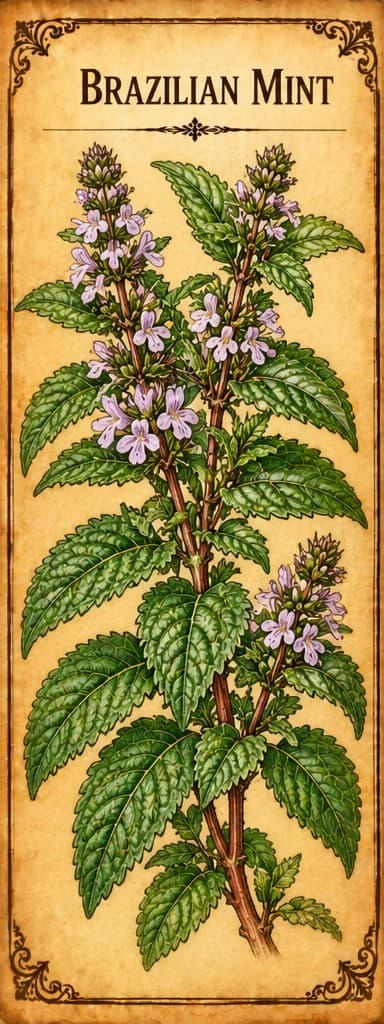
Brazilian Mint
Hyptis crenata
A fragrant Brazilian mint-family herb. In stressed mice its leaf oil reduced anxious behavior, and its compounds relax smooth muscle in animal tissue tests.
Safety at a glance
- PregnancyNothing recorded
- BreastfeedingNothing recorded
- MedicinesNothing recorded
- Who should avoid itNothing recorded
- AllergiesNothing recorded
- ToxicityNothing recorded
Tap a box to read the safety notes below. “Nothing recorded” means our sources don't cover it, not that it's safe.
What is Brazilian Mint?
- Plant family
- Lamiaceae, the mint family
- Parts used
- The leaves and their essential oil
- Where it grows
- Brazil and northern South America
- Genus
- Hyptis
- Species
- crenata
Traditionally used for
- Anxiety
- Gut cramps
Traditionally described as
- Calming (in animal studies)
- Relaxes smooth muscle (in animal tissue)
Natural compounds
What does the research say?
Laboratory & animal research
Lab and animal results show what might be worth studying in people. They don't show that the herb has these effects in humans.
In stressed mice, the leaf oil given for a week reduced anxious behavior, similar to the antidepressant citalopram. It didn't change eating, drinking or weight.[1]Study
Technical detail: 100 and 300 mg/kg; elevated plus maze; main compounds caryophyllene, azulene, α-pinene, bornanone and viridiflorene.
Many compounds in the oil relax smooth muscle, the kind in the gut, blood vessels and womb, in animal tissue tests. Researchers suggest this could explain effects on gut cramps and blood pressure, but it hasn't been tested in people.[2]Study
In short
No studies in people or safety studies were found.
Sources
- [1] Anxiolytic-Like Effect of Hyptis crenata Essential Oil: Behavioral Insights and In Silico SERT Modulation · DOI: 10.1021/acsomega.5c11201Peer-reviewed study
- [2] Translational Perspectives on the Therapeutic Potential of Hyptis Crenata Essential Oil Terpenes in Smooth Muscle Function · DOI: 10.1055/a-2409-3735Peer-reviewed study
This information is educational and traditional in nature, and is not a substitute for professional medical advice. Unfamiliar word? See what these words mean.