
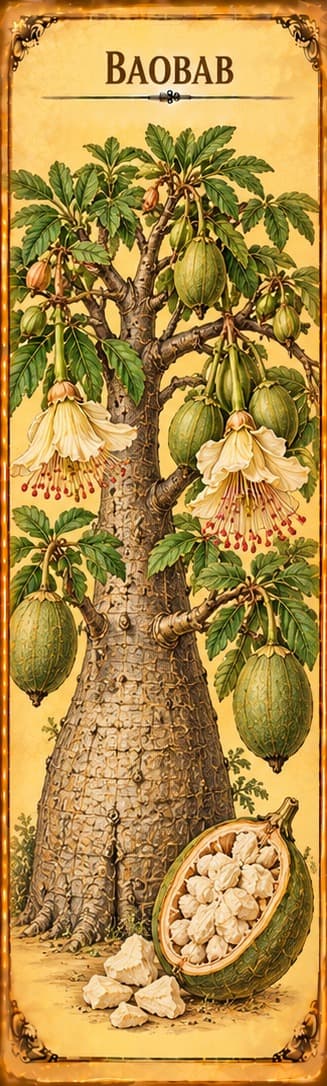
Baobab
Adansonia digitata
The African "monkeybread" tree, whose fiber-rich fruit pulp is a traditional food. Its health benefits are suggested by lab studies but haven't been established in people.
Safety at a glance
- PregnancyNothing recorded
- BreastfeedingNothing recorded
- MedicinesNothing recorded
- Who should avoid itNothing recorded
- AllergiesNothing recorded
- ToxicityNothing recorded
Tap a box to read the safety notes below. “Nothing recorded” means our sources don't cover it, not that it's safe.
What is Baobab?
- Plant family
- Malvaceae, the mallow family
- Parts used
- The fruit pulp
- Where it grows
- The dry savannas of sub-Saharan Africa
- Genus
- Adansonia
- Species
- digitata
Also called
Monkeybread Tree
Traditionally used for
- Food
- Gut health
- Iron
Traditionally described as
- High in fiber
What does the research say?
Laboratory & animal research
Lab and animal results show what might be worth studying in people. They don't show that the herb has these effects in humans.
Baobab fruit pulp is a traditional African food rich in fiber. In lab and animal studies, its fibers fed helpful gut bacteria, and its compounds slowed sugar-digesting enzymes and helped the body take up iron.[1]Study
Research in people
Only six studies in people were found. They looked at blood sugar after meals in healthy adults, and at iron in schoolchildren; one trial raised hemoglobin but not iron stores. Its effects on gut bacteria, immunity and diabetes haven't been tested in people, so its health benefits aren't established.[1]Study
In short
Few studies in people.
Sources
- [1] Baobab (Adansonia digitata L.) Fruit Pulp in Nutritional Therapeutics: Mechanistic Insights, Clinical Evidence, and Future Research Priorities · DOI: 10.3390/foods15203579Peer-reviewed study
This information is educational and traditional in nature, and is not a substitute for professional medical advice. Unfamiliar word? See what these words mean.