
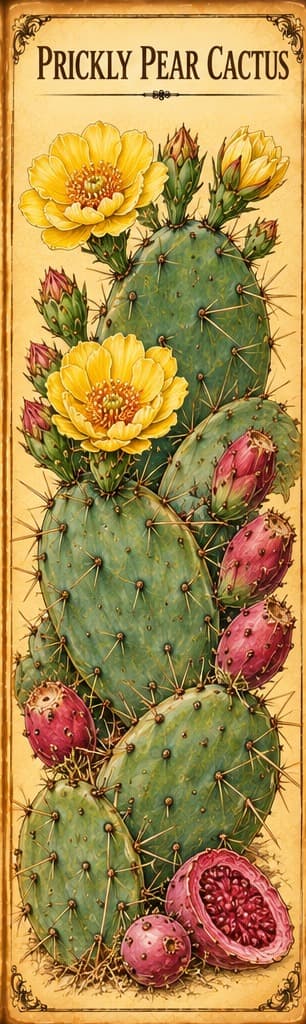
Prickly Pear Cactus
Opuntia ficus-indica
The nopal cactus of Mexico, eaten as a vegetable and fruit. It's rich in antioxidants, and small studies suggest it may raise antioxidant levels and help with weight.
Safety at a glance
- PregnancyNothing recorded
- BreastfeedingNothing recorded
- MedicinesNothing recorded
- Who should avoid itNothing recorded
- AllergiesNothing recorded
- ToxicityNothing recorded
Tap a box to read the safety notes below. “Nothing recorded” means our sources don't cover it, not that it's safe.
What is Prickly Pear Cactus?
- Plant family
- Cactaceae, the cactus family
- Parts used
- The pads (nopales) and fruit
- Where it grows
- Mexico; now grown in dry regions worldwide
- Genus
- Opuntia
- Species
- ficus-indica
Also called
Indian Fig
Regional names
Nopal
Traditionally used for
- Food
- Blood sugar
- Weight
Traditionally described as
- Antioxidant
- May lower blood sugar
What does the research say?
Laboratory & animal research
Lab and animal results show what might be worth studying in people. They don't show that the herb has these effects in humans.
The nopal cactus is rich in polyphenols, vitamins, healthy fats and amino acids. In lab and animal studies, its compounds may help reduce inflammation and showed antioxidant, blood-sugar-lowering, antimicrobial and nerve-protecting effects.[1]Study
Research in people
In a study of 50 healthy adults, 1,500 mg of prickly pear a day for 3 months raised antioxidant levels in saliva by about 48% and lowered markers of cell damage. Participants also reported feeling better. There was no comparison group.[2]Study
Technical detail: salivary total antioxidant capacity +48.1%; MDA −28.3%, 3-NT −51.5%, 8-OHdG −59.8% (P < 0.001).
A 2023 review of 15 studies in 1,670 people with obesity found that eating traditional Mexican foods, including nopal, slightly lowered body mass index. The studies varied a lot, and more trials are needed.[3]Review or trial
In short
Studies in people are small.
Sources
- [1] Nopal cactus (Opuntia ficus-indica) as a source of bioactive compounds for nutrition, health and disease · DOI: 10.3390/molecules190914879Peer-reviewed study
- [2] Assessment of Opuntia ficus-indica supplementation on enhancing antioxidant levels · DOI: 10.1038/s41598-025-87680-7Peer-reviewed study
- [3] Mexican Ancestral Foods (Theobroma cacao, Opuntia ficus indica, Persea americana and Phaseolus vulgaris) Supplementation on Anthropometric, Lipid and Glycemic Control Variables in Obese Patients: A Systematic Review and Meta-Analysis · DOI: 10.3390/foods12061177Review or clinical trial
This information is educational and traditional in nature, and is not a substitute for professional medical advice. Unfamiliar word? See what these words mean.