
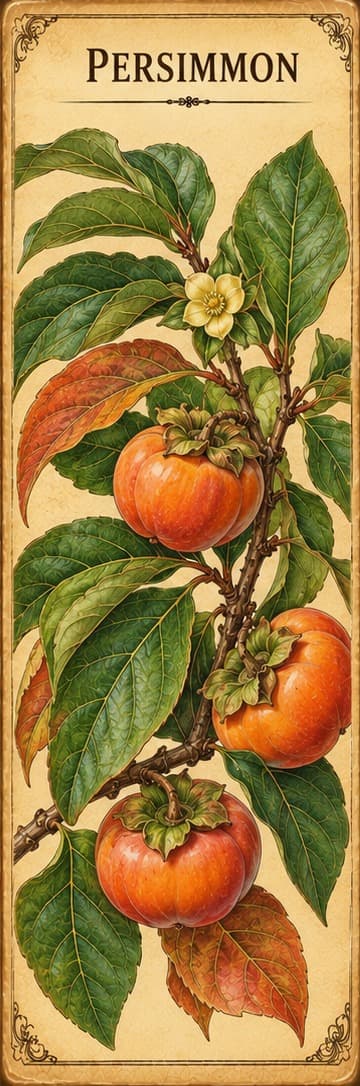
Persimmon
Diospyros kaki
An orange fruit rich in antioxidants. In a trial, a persimmon extract helped overweight adults lose body fat.
Safety at a glance
- PregnancyNothing recorded
- BreastfeedingNothing recorded
- MedicinesNothing recorded
- Who should avoid itNothing recorded
- AllergiesNothing recorded
- ToxicityNothing recorded
Tap a box to read the safety notes below. “Nothing recorded” means our sources don't cover it, not that it's safe.
What is Persimmon?
- Plant family
- Ebenaceae, the ebony family
- Parts used
- The fruit and leaves
- Where it grows
- China; now grown in warm temperate regions worldwide
- Genus
- Diospyros
- Species
- kaki
Also called
Kaki, Japanese Persimmon
Traditionally used for
- Food
- Weight management
Traditionally described as
- Antioxidant
Natural compounds
Safety
Side effects
Unripe persimmons are very astringent, and eating persimmons can form hard masses in the stomach (diospyrobezoars).[1]Study
What does the research say?
Laboratory & animal research
Lab and animal results show what might be worth studying in people. They don't show that the herb has these effects in humans.
Persimmon fruit is rich in proanthocyanidins, carotenoids, tannins and flavonoids with strong antioxidant activity. In studies, its compounds helped against high cholesterol and high blood sugar.[1]Study
Research in people
In a trial, overweight adults took 400 mg of a persimmon fruit extract or a placebo daily for 120 days. The persimmon group lost more body fat, weight and waist size, without losing muscle. Cholesterol and blood sugar didn't change.[2]Study
Technical detail: randomized, double-blind, placebo-controlled (NCT05750342); DEXA and BIA fat mass, p < 0.001.
In short
Unripe fruit is very astringent and can form stomach masses.
Sources
- [1] Persimmon (Diospyros kaki) fruit: hidden phytochemicals and health claims · DOI: 10.17179/excli2015-159Peer-reviewed study
- [2] Efficacy of a Dietary Supplement Extracted from Persimmon (Diospyros kaki L.f.) in Overweight Healthy Adults: A Randomized, Double-Blind, Controlled Clinical Trial · DOI: 10.3390/foods13244072Peer-reviewed study
This information is educational and traditional in nature, and is not a substitute for professional medical advice. Unfamiliar word? See what these words mean.