
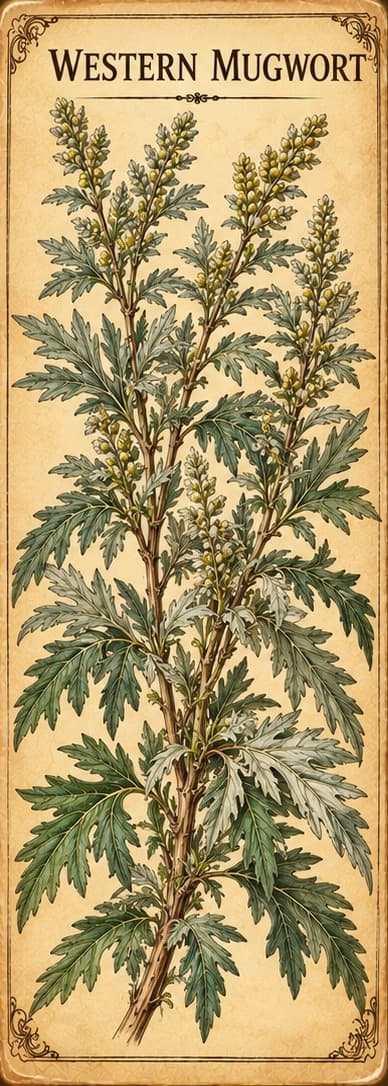
Western Mugwort
Artemisia ludoviciana
A silvery sagebrush of North America, called estafiate in Mexico, where it's used for gastritis. Lab and mouse studies found it active against H. pylori.
Safety at a glance
- PregnancyNothing recorded
- BreastfeedingNothing recorded
- MedicinesNothing recorded
- Who should avoid itNothing recorded
- AllergiesNothing recorded
- ToxicityNothing recorded
Tap a box to read the safety notes below. “Nothing recorded” means our sources don't cover it, not that it's safe.
What is Western Mugwort?
- Plant family
- Asteraceae, the daisy family
- Parts used
- The leaves and stems
- Where it grows
- North America and Mexico
- Genus
- Artemisia
- Species
- ludoviciana
Also called
White Sagebrush
Regional names
Estafiate
Traditionally used for
- Gastritis (folk use)
Traditionally described as
- Contains estafiatin and eupatilin
Natural compounds
What does the research say?
Traditional use
These are traditional uses, not proven treatments.
In Mexico, where it's called estafiate, western mugwort is traditionally used for digestive problems such as gastritis.[1]Study
Laboratory & animal research
Lab and animal results show what might be worth studying in people. They don't show that the herb has these effects in humans.
In lab tests, a water extract killed Helicobacter pylori, the bacterium behind many stomach ulcers. In mice, it protected the stomach by about 70% and reduced inflammation, with no signs of poisoning. Two of its compounds, estafiatin and eupatilin, were active against the bacterium.[1]Study
In lab tests, an extract slowed a ringworm fungus that spreads from pets to people, without harming human skin cells.[2]Study
In short
No human safety studies were found.
Sources
- [1] Anti-Helicobacter pylori Activity of Artemisia ludoviciana subsp. mexicana and Two of Its Bioactive Components, Estafiatin and Eupatilin · DOI: 10.3390/molecules26123654Peer-reviewed study
- [2] Phytotherapeutic potential of Artemisia ludoviciana and Cordia boissieri extracts against the dermatophyte Microsporum canis · DOI: 10.2478/jvetres-2024-0046Peer-reviewed study
This information is educational and traditional in nature, and is not a substitute for professional medical advice. Unfamiliar word? See what these words mean.