
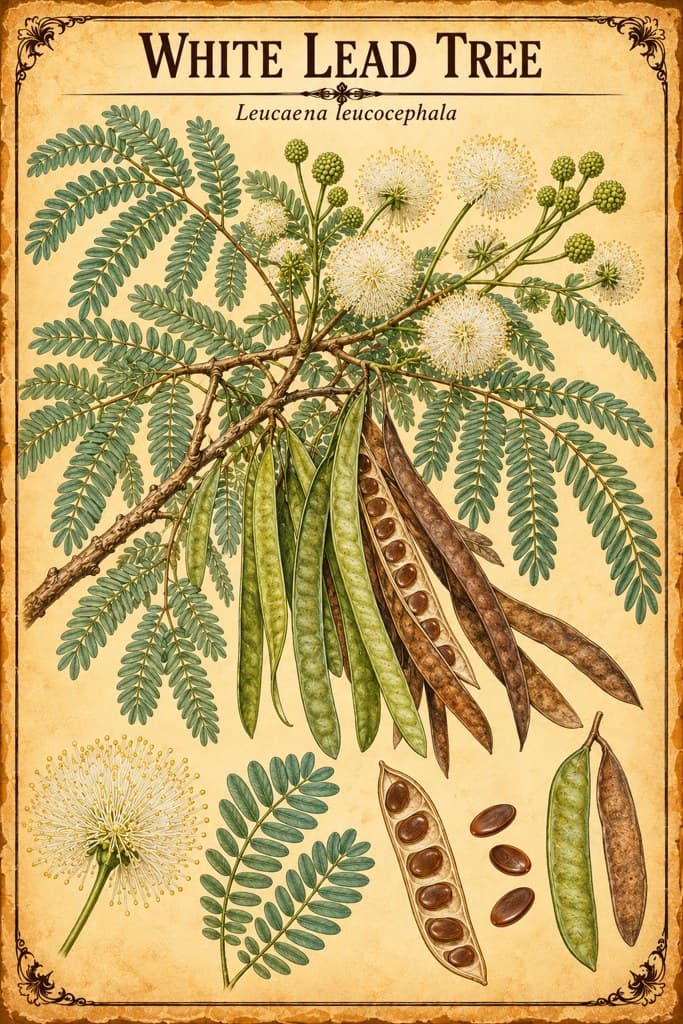
White Lead Tree
Leucaena leucocephala
A fast-growing tropical tree used in Indonesia for diabetes. Its extracts lowered blood sugar in the lab, but it contains the toxic compound mimosine.
Safety at a glance
- PregnancyNothing recorded
- BreastfeedingNothing recorded
- MedicinesNothing recorded
- Who should avoid itNothing recorded
- AllergiesNothing recorded
- Toxicity1 note →
Tap a box to read the safety notes below. “Nothing recorded” means our sources don't cover it, not that it's safe.
What is White Lead Tree?
- Plant family
- Fabaceae, the pea and bean family
- Parts used
- The seeds, leaves and pods
- Where it grows
- Mexico and Central America; now widespread in the tropics
- Genus
- Leucaena
- Species
- leucocephala
Also called
Leucaena
Regional names
Lamtoro
Traditionally used for
- Diabetes (traditional)
Traditionally described as
- Contains mimosine
Natural compounds
Safety
Toxicity testing
White lead tree contains mimosine, a toxic compound that can harm the thyroid and reproduction. In cattle fed the plant, mimosine lowered thyroid hormones.[1]Study
What does the research say?
Traditional use
These are traditional uses, not proven treatments.
White lead tree is one of the plants traditionally used in Indonesia for diabetes and heart and metabolic problems.[2]Review or trial
Laboratory & animal research
Lab and animal results show what might be worth studying in people. They don't show that the herb has these effects in humans.
In lab and animal studies, extracts of the seeds and leaves lowered blood sugar by blocking starch-digesting enzymes and acted as antioxidants. The review says these benefits are offset by its toxicity.[2]Review or trial
In short
Contains mimosine, which can harm the thyroid and reproduction.
Sources
- [1] Effect of Leucaena leucocephala intake on thyroid hormones and energy balance of Brangus bulls · DOI: 10.1093/tas/txaf170Peer-reviewed study
- [2] Multitarget Pharmacological Mechanisms and Safety Profiles of Six Ethnobotanically Prioritized Indonesian Medicinal Plants for Cardiometabolic Disorders: A Systematic Review · DOI: 10.2147/DDDT.S630547Review or clinical trial
This information is educational and traditional in nature, and is not a substitute for professional medical advice. Unfamiliar word? See what these words mean.