
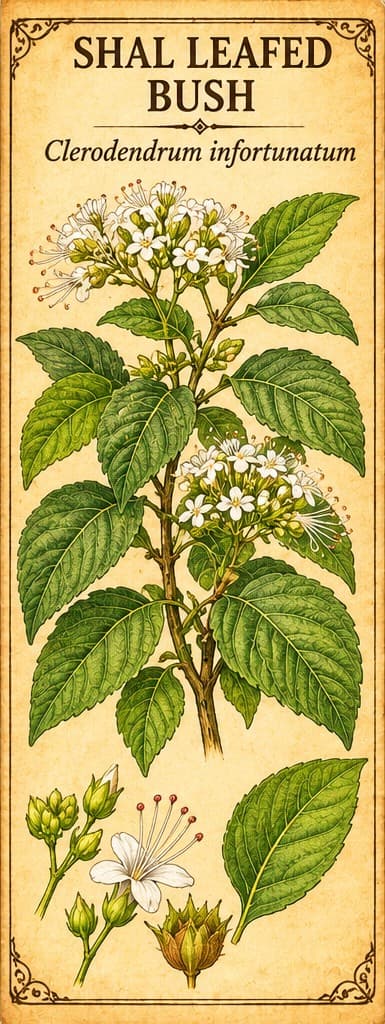
Shal Leafed Bush
Clerodendrum infortunatum
Bhant, an Ayurvedic shrub used after childbirth, on wounds, and for jaundice, fever and asthma. Its leaf extract lowered blood sugar in rats.
Safety at a glance
- PregnancyNothing recorded
- BreastfeedingNothing recorded
- MedicinesNothing recorded
- Who should avoid itNothing recorded
- AllergiesNothing recorded
- ToxicityNothing recorded
Tap a box to read the safety notes below. “Nothing recorded” means our sources don't cover it, not that it's safe.
What is Shal Leafed Bush?
- Plant family
- Lamiaceae, the mint family
- Parts used
- The leaves and root
- Where it grows
- India and Southeast Asia
- Genus
- Clerodendrum
- Species
- infortunatum
Also called
Bhant
Traditional names
Bhandira
Traditionally used for
- Wounds
- Jaundice
- Fever
- Asthma (traditional)
Traditionally described as
- Medicinal leaves
Traditions that use it
- Ayurveda
Used for postnatal care, wounds, jaundice and snakebite.
What does the research say?
Traditional use
These are traditional uses, not proven treatments.
In Ayurveda, bhant is used in care after childbirth, to dress fresh wounds, and for tumors, liver disease, jaundice, scorpion stings and snakebite. In Indian folk medicine it is used for bronchitis, asthma, fever, inflammation and epilepsy.[1]Study
Laboratory & animal research
Lab and animal results show what might be worth studying in people. They don't show that the herb has these effects in humans.
In diabetic rats, a leaf extract lowered blood sugar, though less than the diabetes drug metformin, and improved liver and kidney test results.[2]Study
In short
No human or safety studies were found.
Sources
- [1] Pharmacognostical and high performance thin layer chromatography studies on leaves of Clerodendrum infortunatum L. · DOI: 10.4103/0974-8520.159009Peer-reviewed study
- [2] Evaluation of the Antidiabetic Potential of Methanolic Extract of Clerodendrum infortunatum Compared to Metformin in Streptozotocin-induced Diabetic Rats · DOI: 10.4103/ijabmr.ijabmr_580_24Peer-reviewed study
This information is educational and traditional in nature, and is not a substitute for professional medical advice. Unfamiliar word? See what these words mean.