
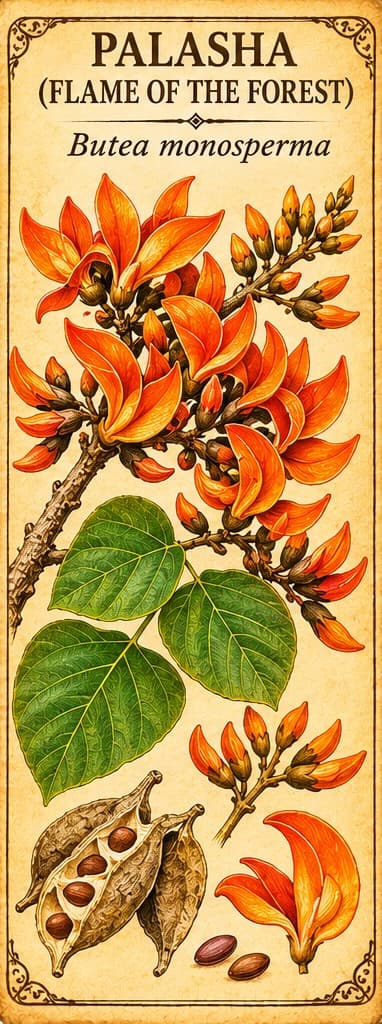
Palasha
Butea monosperma
Flame of the forest, an Indian tree. Its leaf extract lowered blood sugar and raised insulin in diabetic rats.
Safety at a glance
- PregnancyNothing recorded
- BreastfeedingNothing recorded
- MedicinesNothing recorded
- Who should avoid itNothing recorded
- AllergiesNothing recorded
- ToxicityNothing recorded
Tap a box to read the safety notes below. “Nothing recorded” means our sources don't cover it, not that it's safe.
What is Palasha?
- Plant family
- Fabaceae, the pea and bean family
- Parts used
- The leaves, bark, flowers and seeds
- Where it grows
- India and Southeast Asia
- Genus
- Butea
- Species
- monosperma
Also called
Flame of the Forest
Regional names
Palash
Traditionally used for
- Diabetes (research)
Traditionally described as
- Leaf extract raised insulin in rats
What does the research say?
Laboratory & animal research
Lab and animal results show what might be worth studying in people. They don't show that the herb has these effects in humans.
In rats with type 2 diabetes, a leaf extract lowered blood sugar before and after meals, raised insulin, and improved cholesterol and blood fats. It worked by helping the body release insulin and store sugar in the liver.[1]Study
In rats given an antibiotic that damages the kidneys, palash extract protected the kidneys.[2]Study
In short
No human or safety studies were found.
Sources
- [1] Ethanolic Extract of Butea monosperma Leaves Elevate Blood Insulin Level in Type 2 Diabetic Rats, Stimulate Insulin Secretion in Isolated Rat Islets, and Enhance Hepatic Glycogen Formation · DOI: 10.1155/2014/356290Peer-reviewed study
- [2] An experimetal evaluation of nephroprotective potential of Butea monosperma extract in albino rats · DOI: 10.4103/0253-7613.125190Peer-reviewed study
This information is educational and traditional in nature, and is not a substitute for professional medical advice. Unfamiliar word? See what these words mean.