
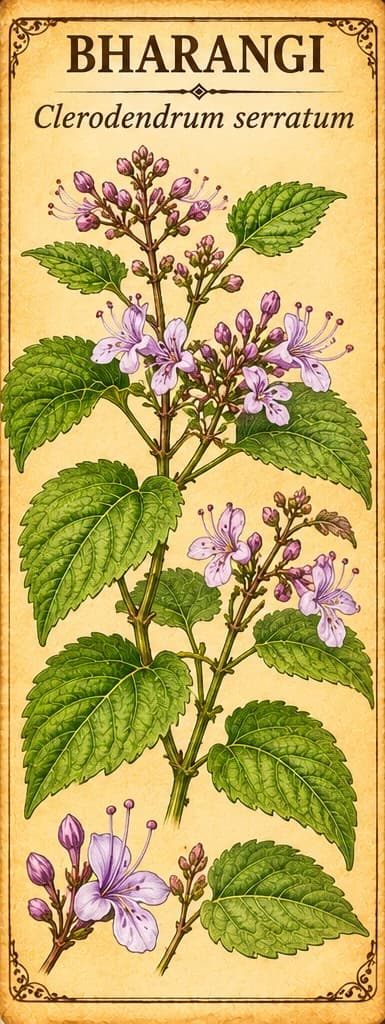
Bharangi
Rotheca serrata
An Asian folk remedy for allergies and, in Thailand, hemorrhoids. Its root extract eased allergic asthma in rats.
Safety at a glance
- PregnancyNothing recorded
- BreastfeedingNothing recorded
- MedicinesNothing recorded
- Who should avoid itNothing recorded
- AllergiesNothing recorded
- ToxicityNothing recorded
Tap a box to read the safety notes below. “Nothing recorded” means our sources don't cover it, not that it's safe.
What is Bharangi?
- Plant family
- Lamiaceae, the mint family
- Parts used
- The roots and leaves
- Where it grows
- South and Southeast Asia
- Genus
- Rotheca
- Species
- serrata
Older scientific names
Clerodendrum serratum
Traditionally used for
- Allergies
- Asthma
- Hemorrhoids (traditional)
Traditionally described as
- Medicinal root
What does the research say?
Traditional use
These are traditional uses, not proven treatments.
Laboratory & animal research
Lab and animal results show what might be worth studying in people. They don't show that the herb has these effects in humans.
In rats with allergic asthma, a root extract reduced airway inflammation and allergy signals and improved breathing.[1]Study
In short
No human or safety studies were found.
Sources
- [1] Clerodendrum serratum extract attenuates production of inflammatory mediators in ovalbumin-induced asthma in rats · DOI: 10.3906/kim-2107-22Peer-reviewed study
- [2] An ethnobotanical review of medicinal plants used for treating hemorrhoids in Thailand · DOI: 10.3389/fphar.2026.1705134Peer-reviewed study
This information is educational and traditional in nature, and is not a substitute for professional medical advice. Unfamiliar word? See what these words mean.