
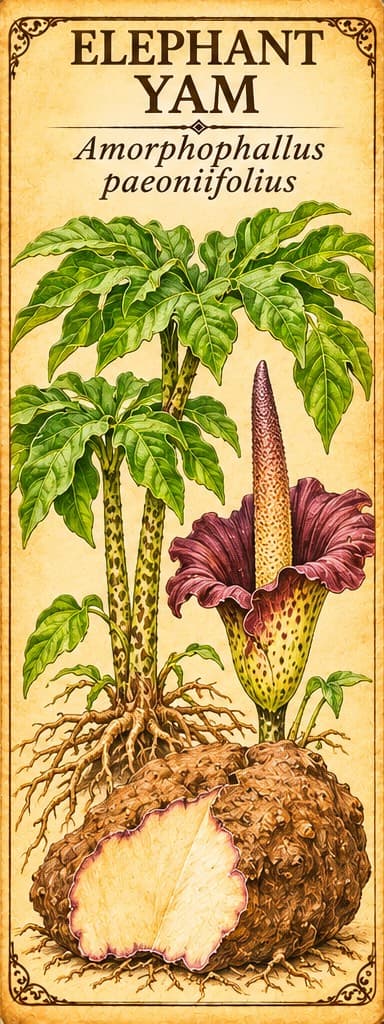
Elephant Yam
Amorphophallus paeoniifolius
Suran, a large edible tuber used in folk medicine for digestive and inflammatory problems. It protected the bowel in rats with colitis.
Safety at a glance
- PregnancyNothing recorded
- BreastfeedingNothing recorded
- MedicinesNothing recorded
- Who should avoid itNothing recorded
- AllergiesNothing recorded
- ToxicityNothing recorded
Tap a box to read the safety notes below. “Nothing recorded” means our sources don't cover it, not that it's safe.
What is Elephant Yam?
- Plant family
- Araceae, the arum family, which includes duckweeds
- Parts used
- The tuber (corm)
- Where it grows
- South and Southeast Asia
- Genus
- Amorphophallus
- Species
- paeoniifolius
Regional names
Suran, Jimmikand
Traditionally used for
- Food
- Digestive problems (traditional)
Traditionally described as
- Edible tuber
What does the research say?
Traditional use
These are traditional uses, not proven treatments.
Elephant yam tuber (suran or jimmikand) is used in folk medicine for digestive and inflammatory disorders, and has long been used in Ayurveda for chronic diseases.[1]Study
Laboratory & animal research
Lab and animal results show what might be worth studying in people. They don't show that the herb has these effects in humans.
In short
A review of toxicity studies concluded it is safe.
Sources
- [1] Beneficial effect of Amorphophallus paeoniifolius tuber on experimental ulcerative colitis in rats · DOI: 10.1080/13880209.2016.1226904Peer-reviewed study
- [2] A phytopharmacological review on an important medicinal plant - Amorphophallus paeoniifolius · DOI: 10.4103/0974-8520.100303Peer-reviewed study
This information is educational and traditional in nature, and is not a substitute for professional medical advice. Unfamiliar word? See what these words mean.