
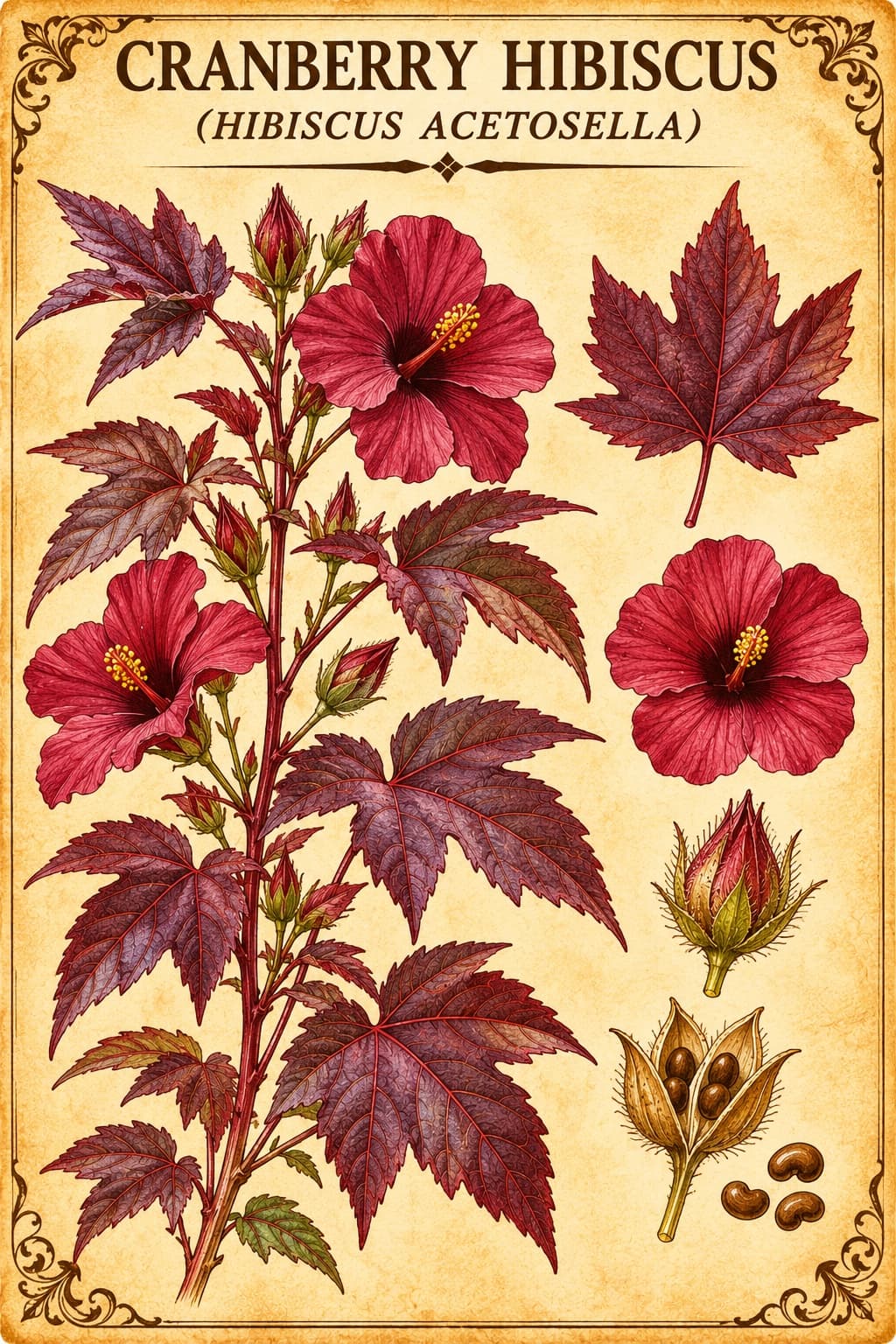
Cranberry Hibiscus
Hibiscus acetosella
An African hibiscus whose leaves are eaten as a vegetable and boiled into drinks for anemia and fever. Its sour flowers are edible too.
Safety at a glance
- PregnancyNothing recorded
- BreastfeedingNothing recorded
- MedicinesNothing recorded
- Who should avoid itNothing recorded
- AllergiesNothing recorded
- ToxicityNothing recorded
Tap a box to read the safety notes below. “Nothing recorded” means our sources don't cover it, not that it's safe.
What is Cranberry Hibiscus?
- Plant family
- Malvaceae, the mallow family
- Parts used
- The leaves, shoots and flowers
- Where it grows
- Africa
- Genus
- Hibiscus
- Species
- acetosella
Traditionally used for
- Leafy vegetable
- Anemia
- Fever (traditional)
Traditionally described as
- Rich in caffeic acid and red plant pigments
Health topics
Where Cranberry Hibiscus appears in symptom search, and why. Being listed doesn't mean it's a proven treatment.
- Fever
Leaf and shoot drinks are a traditional fever remedy in Africa. Not studied in people.
Traditions that use it
- African Traditional Medicine
Leaf and shoot decoctions taken for anemia and fever in western and central Africa.
Natural compounds
What does the research say?
Traditional use
These are traditional uses, not proven treatments.
Laboratory & animal research
Lab and animal results show what might be worth studying in people. They don't show that the herb has these effects in humans.
In lab tests, leaf extracts slowed the growth of Staphylococcus aureus and Pseudomonas bacteria. Red-leaved plants neutralized more free radicals than green-leaved ones.[1]Study
The flowers are rich in antioxidant plant pigments and acids. A flower extract didn't harm human cells in lab tests.[2]Study
In lab tests, leaf extracts calmed the reactions white blood cells use to cause inflammation.[3]Study
In short
No human or safety studies were found.
Sources
- [1] Phenolic Compounds in Extracts of Hibiscus acetosella (Cranberry Hibiscus) and Their Antioxidant and Antibacterial Properties · DOI: 10.3390/molecules25184190Peer-reviewed study
- [2] Hibiscus acetosella: An Unconventional Alternative Edible Flower Rich in Bioactive Compounds · DOI: 10.3390/molecules28124819Peer-reviewed study
- [3] Comparison of metabolic profiles and bioactivities of the leaves of three edible Congolese Hibiscus species · DOI: 10.1080/14786419.2017.1305382Peer-reviewed study
This information is educational and traditional in nature, and is not a substitute for professional medical advice. Unfamiliar word? See what these words mean.