
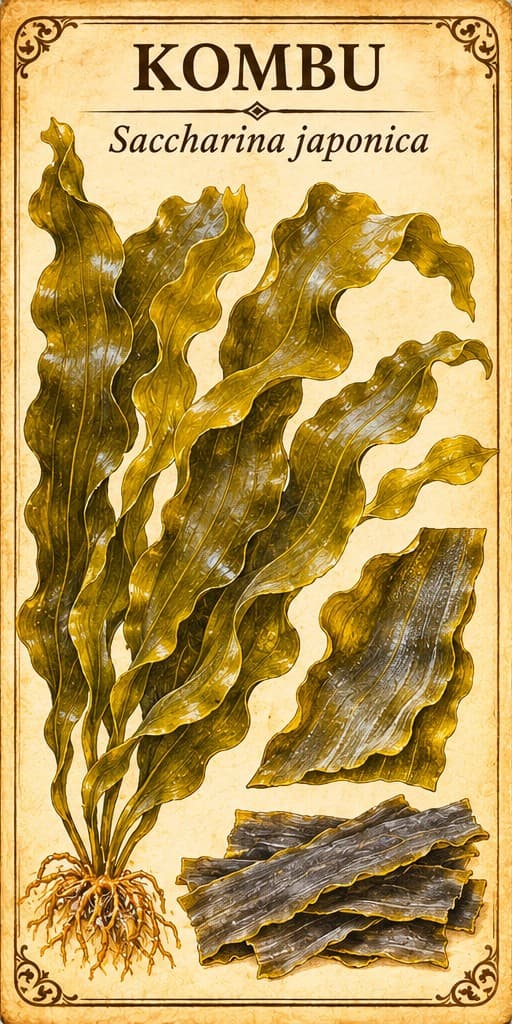
Kombu
Saccharina japonica
A brown seaweed central to Japanese cooking and the main source of iodine in Japan. Too much iodine can harm the thyroid.
Safety at a glance
- PregnancyNothing recorded
- BreastfeedingNothing recorded
- Medicines1 note →
- Who should avoid it1 note →
- AllergiesNothing recorded
- Toxicity1 note →
Tap a box to read the safety notes below. “Nothing recorded” means our sources don't cover it, not that it's safe.
Kombu may interact with some medicines. If you take any medicine, read Interactions with medicines below and talk to your doctor or pharmacist before using it.
What is Kombu?
- Plant family
- Laminariaceae, the kelp family of brown seaweeds
- Parts used
- The dried fronds (blades)
- Where it grows
- The coasts of Japan, Korea and northern China
- Genus
- Saccharina
- Species
- japonica
Also called
Kelp
Regional names
Konbu
Older scientific names
Laminaria japonica
Traditionally used for
- Food
- Iodine source
Traditionally described as
- Very rich in iodine
Natural compounds
How it's prepared
Common ways Kombu is prepared or sold. This isn't advice on how to take it; see Safety below.
- Culinary Preparation
Dried fronds used in Japanese cooking.[1]Study
Safety
Interactions with medicines
Iodine can interact with antithyroid medicines such as methimazole.[2]Health agency
Who should avoid it
A woman with an enlarged thyroid developed an overactive thyroid after drinking a kelp tea for 4 weeks. People with thyroid disease should avoid iodine-containing herbal products.[3]Study
Toxicity testing
Too much iodine can cause goiter (an enlarged thyroid), thyroid inflammation and thyroid cancer. The safe upper limit for adults is 1,100 micrograms a day from all sources, and lower for children (200 micrograms at ages 1 to 3).[2]Health agency
What does the research say?
Traditional use
These are traditional uses, not proven treatments.
Kombu is a brown seaweed central to Japanese cooking, eaten in many forms. About 90% of Japan's kombu is harvested around Hokkaido and has been shipped across the country along the "Kombu Road" since the 1600s.[1]Study
Seaweed is generally rich in iodine, which the body needs to make thyroid hormones. Kelp is also sold as an iodine supplement.[2]Health agency
Research in people
Brown seaweed like kombu is the main source of iodine in Japan, where people eat more iodine than most other populations, about 400 micrograms a day on average. In a survey of 2,845 adults, iodine levels were highest in areas that eat a lot of kelp.[1]Study
In short
Too much can cause thyroid problems; avoid kelp products with thyroid disease.
Sources
- [1] Nationwide survey on iodine nutritional status and thyroid function in Japanese adults · DOI: 10.1507/endocrj.EJ25-0603Peer-reviewed study
- [2] Iodine: Fact Sheet for Consumers — National Institutes of Health, Office of Dietary SupplementsGovernment health agency
- [3] Iodine-induced thyrotoxicosis after ingestion of kelp-containing tea · DOI: 10.1111/j.1525-1497.2006.00416.xPeer-reviewed study
This information is educational and traditional in nature, and is not a substitute for professional medical advice. Unfamiliar word? See what these words mean.