
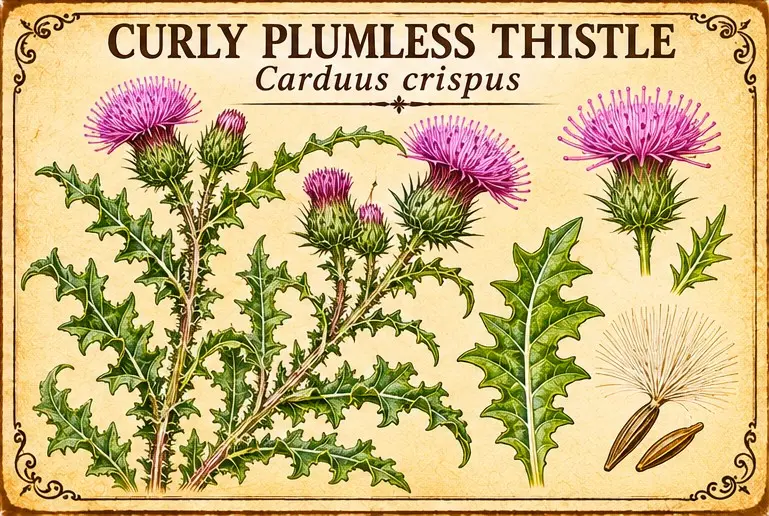
Curly Plumeless Thistle
Carduus crispus
A purple-flowered thistle of Europe and Asia with strong antioxidant activity in lab tests. Very little research exists.
Safety at a glance
- PregnancyNothing recorded
- BreastfeedingNothing recorded
- MedicinesNothing recorded
- Who should avoid itNothing recorded
- AllergiesNothing recorded
- ToxicityNothing recorded
Tap a box to read the safety notes below. “Nothing recorded” means our sources don't cover it, not that it's safe.
What is Curly Plumeless Thistle?
- Plant family
- Asteraceae, the daisy family
- Parts used
- The whole plant
- Where it grows
- Europe and Asia
- Genus
- Carduus
- Species
- crispus
Also called
Welted Thistle
Traditionally used for
- Being studied for male fertility
Traditionally described as
- Contains apigenin and other flavonoids
Health topics
Where Curly Plumeless Thistle appears in symptom search, and why. Being listed doesn't mean it's a proven treatment.
- Cancer Research
Lab studies only: one compound was active against ovarian cancer cells. Not tested against cancer in people.
Safety
Depends on how it's prepared
No human medical or safety studies were found.[1]Study
What does the research say?
Traditional use
These are traditional uses, not proven treatments.
A spiny, purple-flowered thistle of Europe and Asia, also called welted thistle. It's being studied as a possible aid for male fertility.[2]Study
Laboratory & animal research
Lab and animal results show what might be worth studying in people. They don't show that the herb has these effects in humans.
In short
No human medical or safety studies were found.
Sources
- [1] Comparative antioxidant activity and HPLC profiles of some selected Korean thistles · DOI: 10.1007/s12272-008-1116-7Peer-reviewed study
- [2] Apigenin Isolated from Carduus crispus Protects against H2O2-Induced Oxidative Damage and Spermatogenic Expression Changes in GC-2spd Sperm Cells · DOI: 10.3390/molecules27061777Peer-reviewed study
- [3] A new flavone glycoside and other constituents from Carduus crispusPeer-reviewed study
This information is educational and traditional in nature, and is not a substitute for professional medical advice. Unfamiliar word? See what these words mean.