
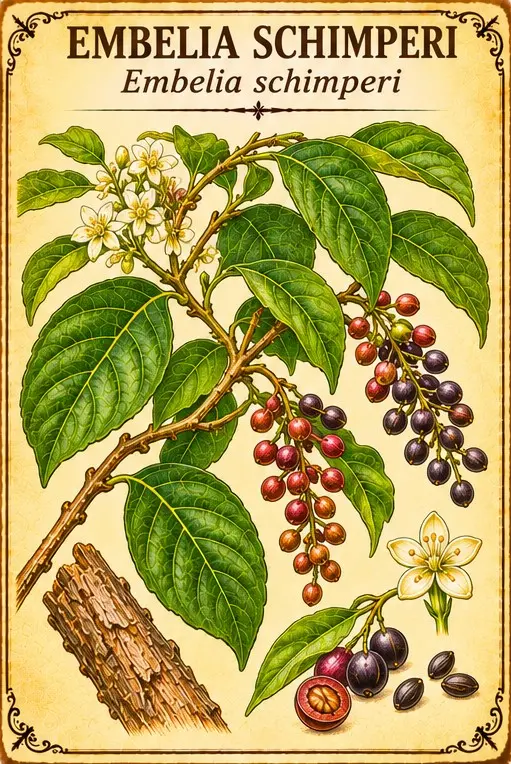
Embelia Schimperi
Embelia schimperi
An East African shrub whose fruit has been eaten for centuries in Ethiopia, and by the Maasai, to expel tapeworm. Fruit extracts cleared tapeworm in mice.
Safety at a glance
- Pregnancy2 notes →
- BreastfeedingNothing recorded
- MedicinesNothing recorded
- Who should avoid itNothing recorded
- AllergiesNothing recorded
- ToxicityNothing recorded
Tap a box to read the safety notes below. “Nothing recorded” means our sources don't cover it, not that it's safe.
What is Embelia Schimperi?
- Plant family
- Primulaceae, the primrose family
- Parts used
- The fruit (seeds)
- Where it grows
- East Africa
- Genus
- Embelia
- Species
- schimperi
Traditionally used for
- Tapeworm
- Intestinal worms (traditional)
Traditionally described as
- Fruit contains embelin
Safety
Pregnancy
In pregnant rats, embelin lowered the number of implanted embryos, slowed fetal growth and affected the placenta. Researchers advise against embelin-rich plants during pregnancy.[1]Study
A fruit extract given to pregnant rats caused inflammation and calcium deposits in the placenta, though it didn't cause birth defects.[2]Study
What does the research say?
Traditional use
These are traditional uses, not proven treatments.
Laboratory & animal research
Lab and animal results show what might be worth studying in people. They don't show that the herb has these effects in humans.
In short
Embelin harmed pregnancy in rats; avoid during pregnancy.
Sources
- [1] Acute and developmental toxicity of embelin isolated from Embelia schimperi Vatke fruit: In vivo and in silico studies · DOI: 10.1016/j.toxrep.2023.06.006Peer-reviewed study
- [2] Teratogenic Evaluation of 80% Ethanol Extract of Embelia schimperi Vatke Fruits on Rat Embryo and Fetuses · DOI: 10.1155/2022/4310521Peer-reviewed study
- [3] Evaluation of anthelmintic potential of the Ethiopian medicinal plant Embelia schimperi Vatke in vivo and in vitro against some intestinal parasites · DOI: 10.1186/s12906-015-0711-7Peer-reviewed study
- [4] Anthelmintic usage of extracts of Embelia schimperi from Tanzania · DOI: 10.1016/0378-8741(95)01322-9Peer-reviewed study
This information is educational and traditional in nature, and is not a substitute for professional medical advice. Unfamiliar word? See what these words mean.