
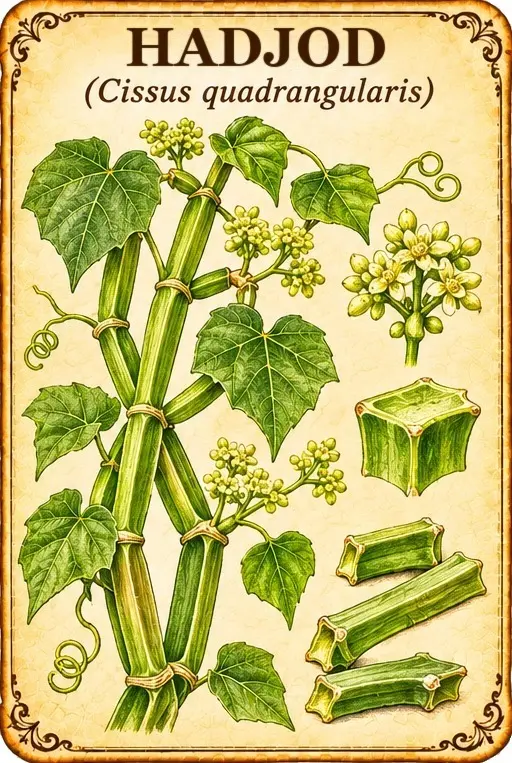
Hadjod
Cissus quadrangularis
A grape-family vine whose name, Hadjod, reflects its use for bones. Trials suggest it eases bone pain and helps fractures heal, though the evidence is low quality.
Safety at a glance
- PregnancyNothing recorded
- BreastfeedingNothing recorded
- MedicinesNothing recorded
- Who should avoid itNothing recorded
- AllergiesNothing recorded
- ToxicityNothing recorded
Tap a box to read the safety notes below. “Nothing recorded” means our sources don't cover it, not that it's safe.
What is Hadjod?
- Plant family
- Vitaceae, the grape family
- Parts used
- The stems
- Genus
- Cissus
- Species
- quadrangularis
Also called
Cissus, Veldt Grape
Traditionally used for
- Bone fractures
- Bone pain
Traditionally described as
- Rich in flavonoids and triterpenoids
Safety
Side effects
No serious side effects were reported in the clinical trials.[1]Review or trial
What does the research say?
Traditional use
These are traditional uses, not proven treatments.
A vine in the grape family used across the tropics for malaria, fever, epilepsy, gout, piles, skin diseases and colic. Its name Hadjod reflects its use for bone problems.[2]Study
Research in people
In a review of 9 trials with 1,108 people, it eased bone pain and helped bone fractures (low-quality evidence). It didn't help hemorrhoids. Combination products with it lowered weight, cholesterol and blood sugar more than placebo.[1]Review or trial
In a review of 7 trials, it raised parathyroid hormone but didn't change calcium, phosphorus or other bone markers. The evidence was very low certainty.[3]Review or trial
In short
No serious side effects reported in trials.
Sources
- [1] Efficacy and Safety of Cissus quadrangularis L. in Clinical Use: A Systematic Review and Meta-analysis of Randomized Controlled Trials · DOI: 10.1002/ptr.5783Review or clinical trial
- [2] Cissus quadrangularis L: A comprehensive multidisciplinary review · DOI: 10.1016/j.jep.2021.114355Peer-reviewed study
- [3] The effects of Cissus quadrangularis on bone-related biomarkers in humans: a systematic review and meta-analysis · DOI: 10.1186/s12906-025-04995-8Review or clinical trial
This information is educational and traditional in nature, and is not a substitute for professional medical advice. Unfamiliar word? See what these words mean.