
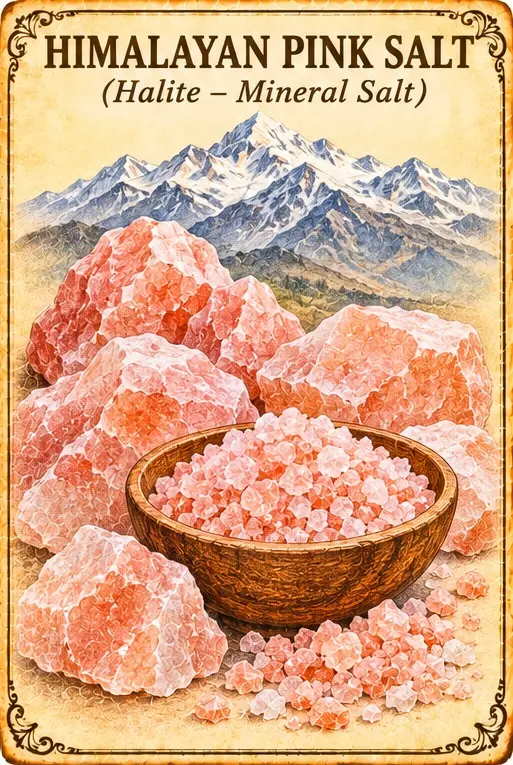
Himalayan Pink Salt
Halite (rock salt), a mineral
A pink rock salt from the Himalayas. It's mostly sodium chloride, and its extra minerals are too small to matter at safe intakes.
Safety at a glance
- PregnancyNothing recorded
- BreastfeedingNothing recorded
- MedicinesNothing recorded
- Who should avoid itNothing recorded
- AllergiesNothing recorded
- ToxicityNothing recorded
Tap a box to read the safety notes below. “Nothing recorded” means our sources don't cover it, not that it's safe.
What is Himalayan Pink Salt?
- Plant family
- Not a plant: a mineral (halite, rock salt)
- Parts used
- The salt crystals
- Where it grows
- The Himalayas
Also called
Himalayan Salt, Pink Salt
Traditionally used for
- Seasoning
Traditionally described as
- Mostly sodium chloride with trace minerals
Safety
How much to use
Treat it like any salt: keep total salt under 5 g a day, as Australian and New Zealand guidelines advise.[1]Study
What does the research say?
Research in people
Like table salt, it's mostly sodium chloride. It contains other minerals, but you'd need more than 30 g a day (about 6 teaspoons) for them to add meaningfully to your diet. That much salt would be harmful.[1]Study
In a small crossover study of 17 women with high blood pressure, switching to Himalayan salt didn't change blood pressure or urine sodium compared with table salt.[3]Study
In short
Some samples contain lead; limit salt to under 5 g a day.
Sources
- [1] An Analysis of the Mineral Composition of Pink Salt Available in Australia · DOI: 10.3390/foods9101490Peer-reviewed study
- [2] Gourmet Table Salts: The Mineral Composition Showdown · DOI: 10.3390/toxics11080705Peer-reviewed study
- [3] Comparison between the Effects of Hymalaian Salt and Common Salt Intake on Urinary Sodium and Blood Pressure in Hypertensive Individuals · DOI: 10.36660/abc.20210069Peer-reviewed study
This information is educational and traditional in nature, and is not a substitute for professional medical advice. Unfamiliar word? See what these words mean.