
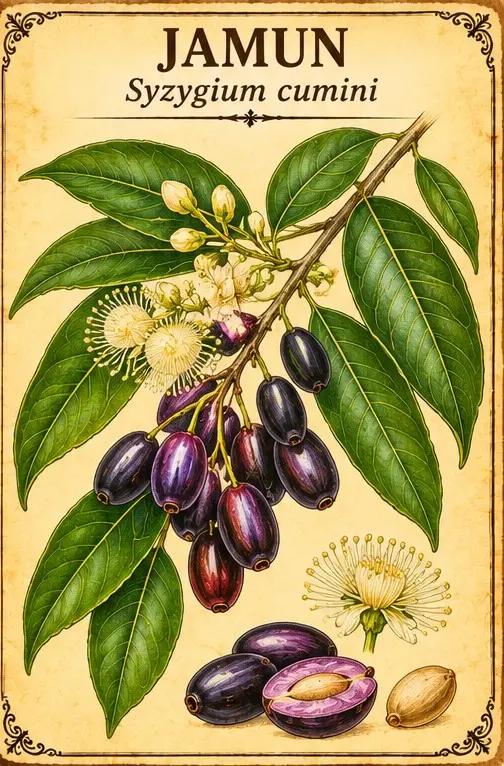
Jamun
Syzygium cumini
Java plum, a tropical tree with dark purple fruit that's one of the most used traditional plants for diabetes. In trials it lowered fasting blood sugar slightly.
Safety at a glance
- PregnancyNothing recorded
- BreastfeedingNothing recorded
- MedicinesNothing recorded
- Who should avoid itNothing recorded
- AllergiesNothing recorded
- ToxicityNothing recorded
Tap a box to read the safety notes below. “Nothing recorded” means our sources don't cover it, not that it's safe.
What is Jamun?
- Plant family
- Myrtaceae, the myrtle family
- Parts used
- The fruit, seeds, bark and leaves
- Where it grows
- South and Southeast Asia
- Genus
- Syzygium
- Species
- cumini
Also called
Java Plum, Jambolan, Black Plum
Older scientific names
Eugenia jambolana
Traditionally used for
- Diabetes
- Diarrhea
- Sore throat (traditional)
Traditionally described as
- Rich in anthocyanins and ellagic acid
Health topics
Where Jamun appears in symptom search, and why. Being listed doesn't mean it's a proven treatment.
- Diarrhea
The fruit is a traditional remedy for chronic diarrhea. Not well studied in people.
- High Blood Sugar
Lowered fasting blood sugar slightly in trials; low-quality evidence.
Safety
Side effects
Diabetes trials found no clear harm to the liver or kidneys, but side effects were poorly reported. Jamun shouldn't replace diabetes medicine.[1]Review or trial
What does the research say?
Traditional use
These are traditional uses, not proven treatments.
A tropical tree with dark purple, plum-like fruit. It's one of the most widely used plants for diabetes in traditional medicine, and the seeds are said to slow the breakdown of starch into sugar.[2]Study
The fruit is used for chronic diarrhea and other gut problems, the bark for sore throat, bronchitis, asthma and dysentery, and juice of the young leaves for diarrhea in children.[2]Study
Research in people
A 2026 review of 13 trials in people with type 2 diabetes or prediabetes found jamun and related plants lowered fasting blood sugar slightly, about 16 mg/dL in the jamun trials. They didn't clearly improve after-meal sugar or HbA1c, and the evidence was low quality.[1]Review or trial
In a trial of 90 people with leg ulcers, dressings with jamun extract healed ulcers no better than standard dressings.[3]Study
In short
Shouldn't replace diabetes medicine.
Sources
- [1] Efficacy and Safety of Syzygium cumini and Related Myrtaceae Interventions for Dysglycemia: A Systematic Review and Meta-Analysis of Randomized Controlled Trials · DOI: 10.3390/foods15132332Review or clinical trial
- [2] Syzygium cumini (L.) Skeels: a review of its phytochemical constituents and traditional uses · DOI: 10.1016/S2221-1691(12)60050-1Peer-reviewed study
- [3] Randomized, double-blind clinical trial comparing the healing of stasis ulcers in lower limbs with standard hydrocolloid gel dressings and with dressings with Syzygium cumini extract · DOI: 10.1177/02683555221088380Peer-reviewed study
This information is educational and traditional in nature, and is not a substitute for professional medical advice. Unfamiliar word? See what these words mean.