
MedicinalSourced entry
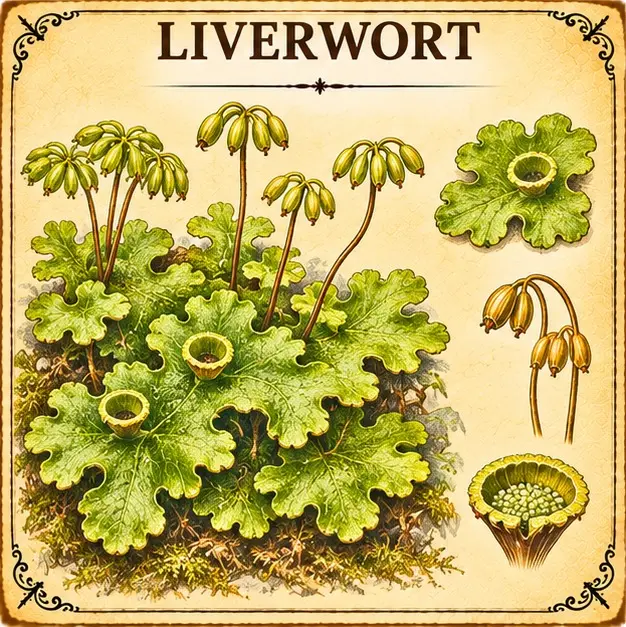
Liverwort
Marchantia polymorpha
The world's most widespread liverwort, used traditionally for wounds, boils, broken bones and liver problems. Its extract calmed inflammation in skin cells.
Safety at a glance
- PregnancyNothing recorded
- BreastfeedingNothing recorded
- MedicinesNothing recorded
- Who should avoid itNothing recorded
- AllergiesNothing recorded
- ToxicityNothing recorded
Tap a box to read the safety notes below. “Nothing recorded” means our sources don't cover it, not that it's safe.
What is Liverwort?
- Plant family
- Marchantiaceae, the umbrella liverwort family
- Parts used
- The whole plant
- Genus
- Marchantia
- Species
- polymorpha
Also called
Common Liverwort, Umbrella Liverwort
Traditionally used for
- Wounds
- Boils
- Liver problems (traditional)
Traditionally described as
- Contains marchantin A
Safety
Depends on how it's prepared
There are no human safety studies.[1]Study
What does the research say?
Traditional use
These are traditional uses, not proven treatments.
Laboratory & animal research
Lab and animal results show what might be worth studying in people. They don't show that the herb has these effects in humans.
In short
No human safety studies.
Sources
- [1] Anti-Inflammatory Effect of Liverwort (Marchantia polymorpha L.) and Racomitrium Moss (Racomitrium canescens (Hedw.) Brid.) Growing in Korea · DOI: 10.3390/plants10102075Peer-reviewed study
- [2] Marchantia polymorpha as a Source of Biologically Active Compounds · DOI: 10.3390/molecules30030558Peer-reviewed study
This information is educational and traditional in nature, and is not a substitute for professional medical advice. Unfamiliar word? See what these words mean.