
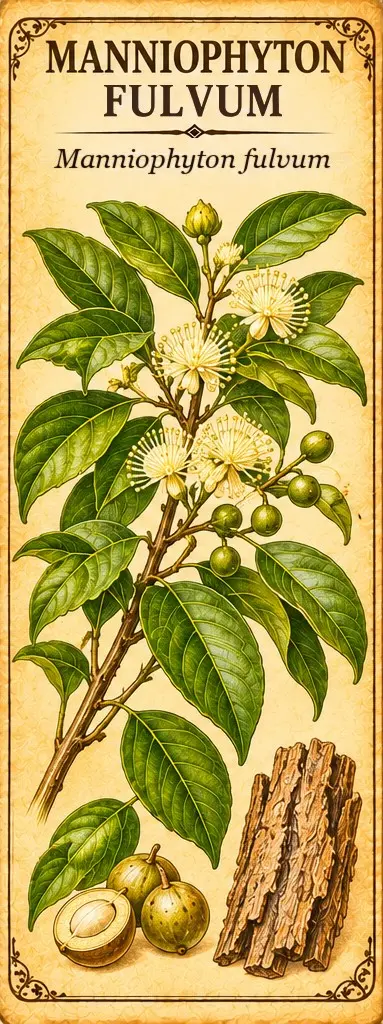
Manniophyton Fulvum
Manniophyton fulvum
A Central African climbing plant that Baka hunter-gatherers call coussa and use for hunting luck and basket weaving. Wild chimpanzees eat it.
Safety at a glance
- PregnancyNothing recorded
- BreastfeedingNothing recorded
- MedicinesNothing recorded
- Who should avoid itNothing recorded
- AllergiesNothing recorded
- ToxicityNothing recorded
Tap a box to read the safety notes below. “Nothing recorded” means our sources don't cover it, not that it's safe.
What is Manniophyton Fulvum?
- Plant family
- Euphorbiaceae, the spurge family
- Parts used
- The leaves and stems
- Where it grows
- West and Central Africa
- Genus
- Manniophyton
- Species
- fulvum
Regional names
Coussa
Traditionally used for
- Hunting luck
- Basket weaving (traditional)
Traditionally described as
- Leaf extract had a small effect against germs in lab tests
Safety
Depends on how it's prepared
No medical or safety studies were found.[1]Study
What does the research say?
Traditional use
These are traditional uses, not proven treatments.
Baka hunter-gatherers in Cameroon, who call it coussa, use the leaves for hunting luck and the stems to weave baskets for carrying their catch.[1]Study
Laboratory & animal research
Lab and animal results show what might be worth studying in people. They don't show that the herb has these effects in humans.
It's one of the plants wild chimpanzees eat in Ivory Coast. In lab tests, a leaf extract had a small effect against germs.[2]Study
In short
No medical or safety studies were found.
Sources
- [1] Traditional knowledge of plants used in hunting and fishing practices among Baka hunter-gatherers of eastern Cameroon · DOI: 10.1186/s13002-022-00571-3Peer-reviewed study
- [2] Antimicrobial potential of 27 plants consumed by chimpanzees (Pan troglodytes verus Blumenbach) in Ivory Coast · DOI: 10.1186/s12906-015-0918-7Peer-reviewed study
This information is educational and traditional in nature, and is not a substitute for professional medical advice. Unfamiliar word? See what these words mean.