
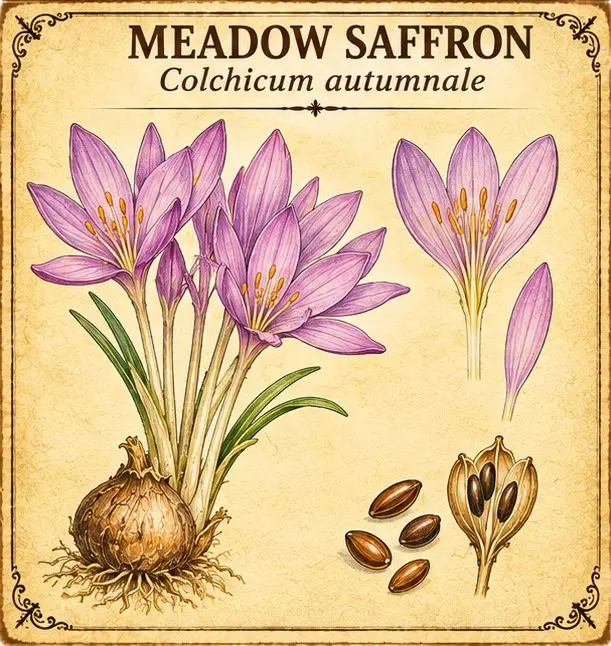
Meadow Saffron
Colchicum autumnale
A highly poisonous autumn-flowering plant that contains colchicine. Its leaves are often mistaken for wild garlic, and about a third of reported poisonings are fatal.
Safety at a glance
- PregnancyNothing recorded
- BreastfeedingNothing recorded
- MedicinesNothing recorded
- Who should avoid itNothing recorded
- AllergiesNothing recorded
- Toxicity2 notes →
Tap a box to read the safety notes below. “Nothing recorded” means our sources don't cover it, not that it's safe.
What is Meadow Saffron?
- Plant family
- Colchicaceae, the autumn crocus family
- Parts used
- The corm, seeds and leaves (all poisonous)
- Where it grows
- Europe
- Genus
- Colchicum
- Species
- autumnale
Also called
Autumn Crocus
Traditionally used for
- None (poisonous)
Traditionally described as
- Contains colchicine
Safety
Toxicity testing
Highly poisonous. Its colchicine causes vomiting and diarrhea within hours, then can shut down the bone marrow and damage the heart. In reported accidental poisonings about a third of people died.[1]Study
Most poisonings happen when people mistake its spring leaves for wild garlic (ramsons, Allium ursinum). Doctors are advised to suspect it in anyone with vomiting or diarrhea after eating wild greens in spring.[2]Study
What does the research say?
Traditional use
These are traditional uses, not proven treatments.
A crocus-like meadow flower that blooms in autumn. It contains colchicine, a highly toxic alkaloid.[1]Study
In short
Highly poisonous; often mistaken for wild garlic.
Sources
- [1] Accidental poisoning with autumn crocus (Colchicum autumnale): a case series · DOI: 10.1080/15563650.2020.1832234Peer-reviewed study
- [2] Colchicum autumnale intoxications: experience of the Poisons Information Centre, Austria 2002-2018 · DOI: 10.1080/15563650.2023.2272572Peer-reviewed study
This information is educational and traditional in nature, and is not a substitute for professional medical advice. Unfamiliar word? See what these words mean.