
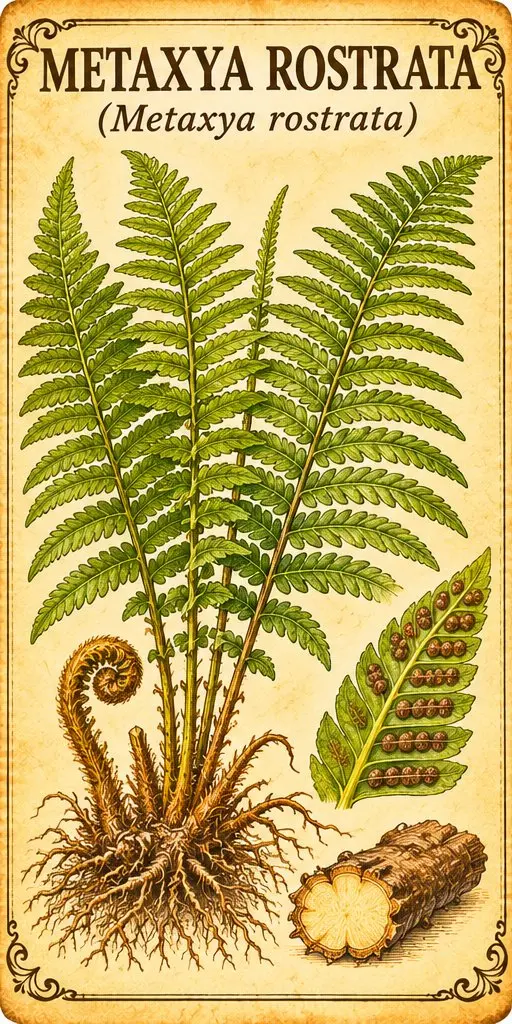
Metaxya Rostrata
Metaxya rostrata
A rainforest tree fern used in Costa Rica for intestinal ulcers. Its compounds killed colon cancer cells in the lab.
Safety at a glance
- PregnancyNothing recorded
- BreastfeedingNothing recorded
- MedicinesNothing recorded
- Who should avoid itNothing recorded
- AllergiesNothing recorded
- ToxicityNothing recorded
Tap a box to read the safety notes below. “Nothing recorded” means our sources don't cover it, not that it's safe.
What is Metaxya Rostrata?
- Plant family
- Metaxyaceae, a family of tree ferns
- Parts used
- The rhizome (underground stem) and rootlets
- Genus
- Metaxya
- Species
- rostrata
Traditionally used for
- Intestinal ulcers (traditional)
Traditionally described as
- Contains xanthones
Health topics
Where Metaxya Rostrata appears in symptom search, and why. Being listed doesn't mean it's a proven treatment.
- Cancer Research
Traditionally used in Costa Rica for tumors. In lab studies, compounds from the fern killed colon cancer cells. Not tested against cancer in people.
What does the research say?
Traditional use
These are traditional uses, not proven treatments.
This tree fern grows in lowland rainforests of Central and South America. In Costa Rica it is used in traditional medicine for intestinal problems such as ulcers and tumors.[1]Study
Laboratory & animal research
Lab and animal results show what might be worth studying in people. They don't show that the herb has these effects in humans.
In lab studies, compounds called xanthones from the fern killed several types of colon cancer cells. This has not been tested in animals or people.[2]Study
Technical detail: 2-deprenyl-rheediaxanthone B and its 7-hydroxy derivative destabilized FoxM1 and inhibited topoisomerase I.
In short
No human studies or safety data.
Sources
- [1] Two Unusual Methylidenecyclopropane Glucosides from Metaxya rostrata C.Presl · DOI: 10.1002/hlca.201200111Peer-reviewed study
- [2] Destabilization of FoxM1 and Inhibition of Topoisomerase I Contribute to Cytotoxicity of Prenylated Xanthones Isolated from Metaxya rostrata · DOI: 10.1055/a-1097-8722Peer-reviewed study
This information is educational and traditional in nature, and is not a substitute for professional medical advice. Unfamiliar word? See what these words mean.