
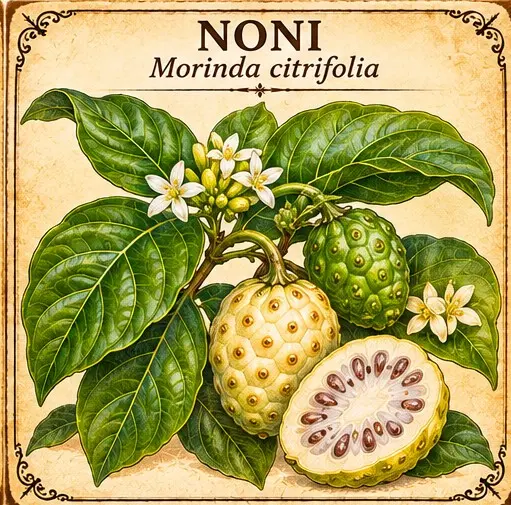
Noni
Morinda citrifolia
A tropical fruit sold worldwide as a health juice, with many claimed benefits but little clinical evidence. It's high in potassium, and liver injury has been reported.
Safety at a glance
- PregnancyNothing recorded
- BreastfeedingNothing recorded
- MedicinesNothing recorded
- Who should avoid it1 note →
- AllergiesNothing recorded
- Toxicity2 notes →
Tap a box to read the safety notes below. “Nothing recorded” means our sources don't cover it, not that it's safe.
What is Noni?
- Plant family
- Rubiaceae, the coffee family
- Parts used
- The fruit (juice), and also leaves and stem
- Where it grows
- Southeast Asia, Australia and the Pacific Islands
- Genus
- Morinda
- Species
- citrifolia
Also called
Indian Mulberry, Noni Juice
Traditionally used for
- Health drink
- Skin infections
Traditionally described as
- Fruit rich in potassium
Safety
Who should avoid it
Noni juice is high in potassium, about as much as orange juice. A man with kidney disease developed dangerously high potassium after drinking it, so people on low-potassium diets should avoid it.[1]Study
Toxicity testing
Cases of liver injury have been reported in people drinking noni juice. A woman on a seizure medicine developed severe liver injury after drinking it for months and recovered after stopping.[2]Study
Europe's food safety agency reviewed the liver cases and found no clear link to noni juice, but advised continued watchfulness.[3]Study
What does the research say?
Traditional use
These are traditional uses, not proven treatments.
A small tropical tree with a bumpy, pungent fruit. Noni juice has been sold worldwide as a health drink since the 1990s with many claimed benefits, and the EU approved it as a novel food in 2003.[3]Study
Research in people
In short
Avoid with kidney disease or a low-potassium diet; rare liver injury reported.
Sources
- [1] Noni juice (Morinda citrifolia): hidden potential for hyperkalemia? · DOI: 10.1016/s0272-6386(00)70342-8Peer-reviewed study
- [2] Drug-Induced Liver Injury Associated with Noni (Morinda citrifolia) Juice and Phenobarbital · DOI: 10.1159/000343651Peer-reviewed study
- [3] Morinda citrifolia (Noni) fruit--phytochemistry, pharmacology, safety · DOI: 10.1055/s-2007-967115Peer-reviewed study
- [4] A double-blind, randomized, clinical trial on the antileishmanial activity of a Morinda citrifolia (Noni) stem extract and its major constituentsPeer-reviewed study
This information is educational and traditional in nature, and is not a substitute for professional medical advice. Unfamiliar word? See what these words mean.