
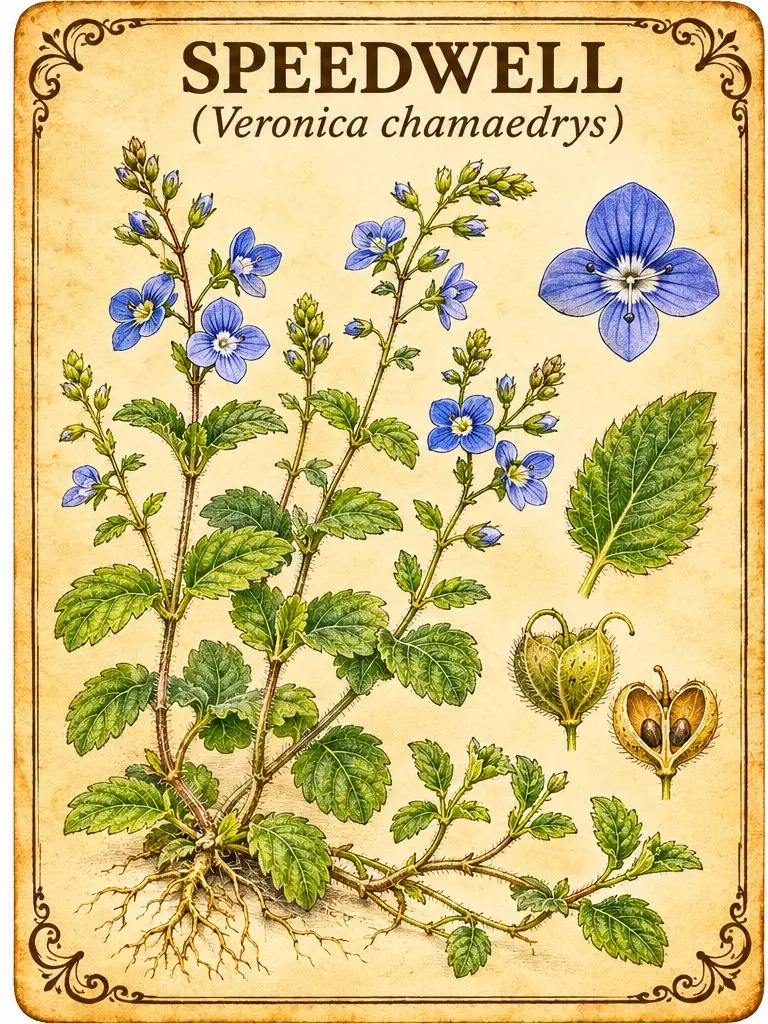
Speedwell
Veronica chamaedrys
Germander speedwell, often sold in place of the medicinal common speedwell. It is described as having no medicinal effect.
Safety at a glance
- PregnancyNothing recorded
- BreastfeedingNothing recorded
- MedicinesNothing recorded
- Who should avoid itNothing recorded
- AllergiesNothing recorded
- ToxicityNothing recorded
Tap a box to read the safety notes below. “Nothing recorded” means our sources don't cover it, not that it's safe.
What is Speedwell?
- Plant family
- Plantaginaceae, the plantain family
- Parts used
- The above-ground parts
- Genus
- Veronica
- Species
- chamaedrys
Also called
Germander Speedwell
Traditionally used for
- Often substituted for common speedwell
Traditionally described as
- Contains flavonoids
Safety
Contamination
Germander speedwell is the most common substitute for common speedwell in herbal products. A 2017 DNA test of 16 products labeled as common speedwell found the right species in only 15% of them, and germander speedwell in 62%. None contained exactly what the label said.[1]Study
What does the research say?
Traditional use
These are traditional uses, not proven treatments.
This plant is germander speedwell. The speedwell traditionally used as medicine is a different species, common speedwell (Veronica officinalis), which has a long history of use in European folk medicine, mainly in central and eastern Europe and the Balkans.[1]Study
Some plants in the speedwell family have been used in traditional medicine for flu, breathing problems, coughs, sore throat, swelling and wounds.[2]Study
A 2007 study described germander speedwell as widespread but having no medicinal effect, and set out ways to tell it apart from common speedwell so it isn't sold in its place.[3]Study
Laboratory & animal research
Lab and animal results show what might be worth studying in people. They don't show that the herb has these effects in humans.
The above-ground parts contain flavonoids, including luteolin and apigenin.[4]Study
In short
Speedwell products are often mislabeled.
Sources
- [1] Veronica officinalis Product Authentication Using DNA Metabarcoding and HPLC-MS Reveals Widespread Adulteration with Veronica chamaedrys · DOI: 10.3389/fphar.2017.00378Peer-reviewed study
- [2] Review of the Ethnopharmacology, Phytochemistry, and Pharmacology of the Genus Veronica · DOI: 10.1142/S0192415X19500617Peer-reviewed study
- [3] A comparative study of some Veronica speciesPeer-reviewed study
- [4] External flavonoid aglycones from Veronica chamaedrys L. (Scrophulariaceae)Peer-reviewed study
This information is educational and traditional in nature, and is not a substitute for professional medical advice. Unfamiliar word? See what these words mean.