
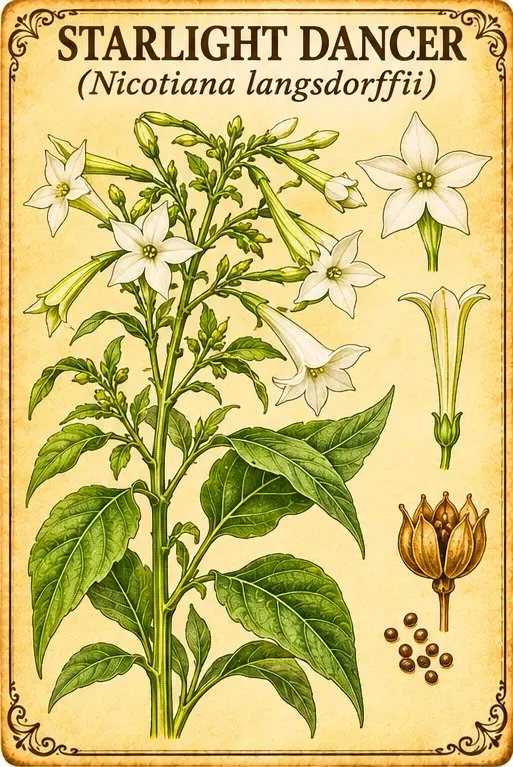
Starlight Dancer
Nicotiana langsdorffii
A tobacco species with no medicinal research of its own. Its relative, common tobacco, has compounds studied in the lab, but nicotine is addictive and toxic.
Safety at a glance
- PregnancyNothing recorded
- BreastfeedingNothing recorded
- MedicinesNothing recorded
- Who should avoid itNothing recorded
- AllergiesNothing recorded
- Toxicity1 note →
Tap a box to read the safety notes below. “Nothing recorded” means our sources don't cover it, not that it's safe.
What is Starlight Dancer?
- Plant family
- Solanaceae, the nightshade family
- Parts used
- No medicinal use of this species is documented
- Genus
- Nicotiana
- Species
- langsdorffii
Traditionally used for
- No documented medicinal use (related species: tobacco)
Traditionally described as
- A tobacco plant
Health topics
Where Starlight Dancer appears in symptom search, and why. Being listed doesn't mean it's a proven treatment.
- Cancer Research
Lab studies only: compounds from a related tobacco plant slowed some cancer cells. Not tested against cancer in people.
- Poisonous Plants
A tobacco plant; tobacco's nicotine is addictive and toxic in high doses.
Safety
Toxicity testing
Nicotine, tobacco's main compound, is addictive and toxic in high doses. Tobacco smoke contains cancer-causing chemicals. This information is for common tobacco; no safety research on Starlight Dancer was found.[1]Study
What does the research say?
Traditional use
These are traditional uses, not proven treatments.
No medicinal research on Starlight Dancer itself was found. The information on this page is about its relative, common tobacco (Nicotiana tabacum), and may not apply to this plant.
Native Americans regarded tobacco as a holy herb and used it for many ailments, including bronchitis, toothache, sore throat, headache, colds, burns, arthritis, skin problems and insect bites. Chinese herbal texts record it for pain, swelling, skin conditions and snakebite.[1]Study
Laboratory & animal research
Lab and animal results show what might be worth studying in people. They don't show that the herb has these effects in humans.
In lab and animal studies, compounds from common tobacco have shown effects including:
- nicotine protected nerve cells in models of Alzheimer's and Parkinson's disease, reduced inflammation and lowered body weight
- solanesol acted as an antioxidant and reduced inflammation
- cembranoids slowed some cancer cells and fought bacteria and fungi
- tobacco seed oil lowered blood fats in rats
The review stresses that this is not a reason to smoke, because tobacco smoke contains cancer-causing chemicals.[1]Study
Research in people
In small studies of people with ulcerative colitis, nicotine patches combined with standard treatment worked better than standard treatment alone. But the number of people studied was small, and nicotine trials for colitis were stopped.[1]Study
In short
Tobacco plants contain nicotine, which is addictive and toxic in high doses.
Sources
- [1] Phytochemicals derived from Nicotiana tabacum L. plant contribute to pharmaceutical development · DOI: 10.3389/fphar.2024.1372456Peer-reviewed study
This information is educational and traditional in nature, and is not a substitute for professional medical advice. Unfamiliar word? See what these words mean.