
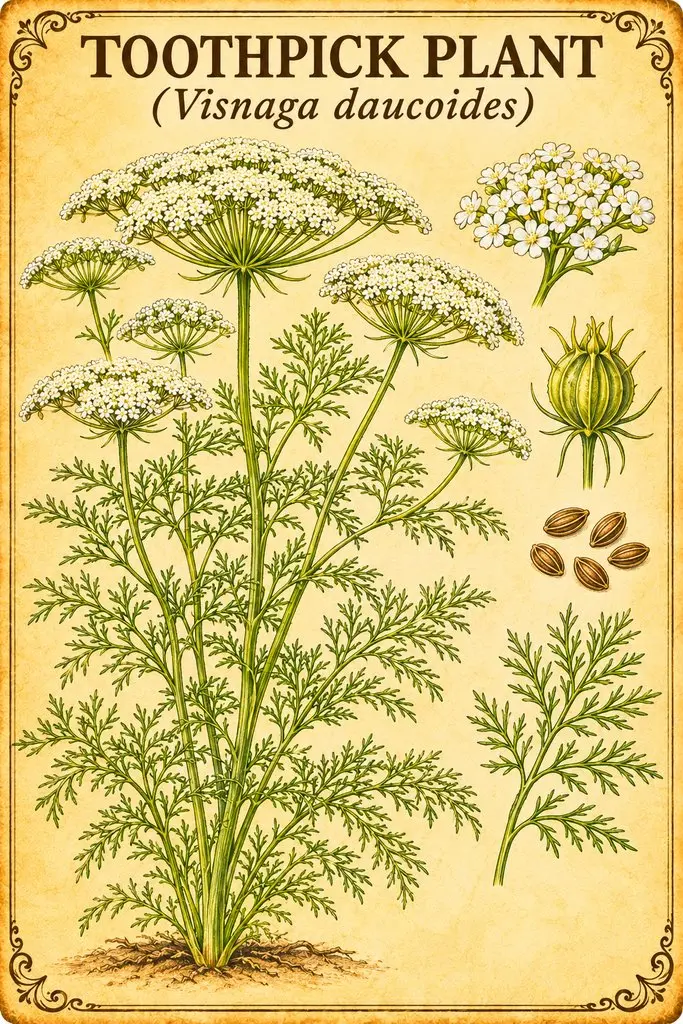
Toothpick Plant
Visnaga daucoides
Khella, a traditional medicinal plant. Long-term use of its powder has caused fatal poisoning.
Safety at a glance
- PregnancyNothing recorded
- BreastfeedingNothing recorded
- MedicinesNothing recorded
- Who should avoid itNothing recorded
- AllergiesNothing recorded
- Toxicity1 note →
Tap a box to read the safety notes below. “Nothing recorded” means our sources don't cover it, not that it's safe.
What is Toothpick Plant?
- Plant family
- Apiaceae, the carrot and parsley family
- Parts used
- The fruits (seeds) and above-ground parts
- Genus
- Visnaga
- Species
- daucoides
Also called
Khella
Older scientific names
Ammi visnaga
Traditionally used for
- Traditional medicine
Traditionally described as
- Contains visnagin
Health topics
Where Toothpick Plant appears in symptom search, and why. Being listed doesn't mean it's a proven treatment.
- Cancer Research
Lab studies only: extracts slowed lung cancer cells. Not tested against cancer in people.
- Liver Safety Warnings
A fatal poisoning case involved severe liver damage.
- Poisonous Plants
Long-term use of the powder caused fatal poisoning in a young woman.
Safety
Toxicity testing
An 18-year-old woman who treated her vitiligo by taking the plant's powder for a long time died of poisoning, with damage to her liver, kidneys, lungs and pancreas. The authors warn that long-term use without medical supervision can be dangerous, and that the strength of its compounds varies.[1]Study
What does the research say?
Traditional use
These are traditional uses, not proven treatments.
The plant is used in traditional medicine to treat a variety of ailments.[2]Study
Laboratory & animal research
Lab and animal results show what might be worth studying in people. They don't show that the herb has these effects in humans.
Visnagin, one of the plant's main compounds, has shown effects against inflammation and diabetes and benefits for the heart and kidneys in lab and animal research. A 2024 review called it a promising lead but said more research is needed on whether it is safe to use.[2]Study
In a 2025 lab study, extracts of plants from Iraq and Turkey acted as antioxidants, slowed lung cancer cells, and blocked enzymes involved in memory. The results differed by where the plants grew.[3]Study
In short
Can be toxic; a fatal poisoning has been reported.
Sources
- [1] Autopsy case: Vitiligo death from self-medication by Ammi visnaga poisoning · DOI: 10.1177/00258172251337046Peer-reviewed study
- [2] Therapeutic potential and pharmacological mechanism of visnagin · DOI: 10.1016/j.joim.2024.05.001Peer-reviewed study
- [3] Geographical variation in antioxidant, anticancer and anticholinesterase activities and phenolic contents of Visnaga daucoides · DOI: 10.1038/s41598-025-08936-wPeer-reviewed study
This information is educational and traditional in nature, and is not a substitute for professional medical advice. Unfamiliar word? See what these words mean.