
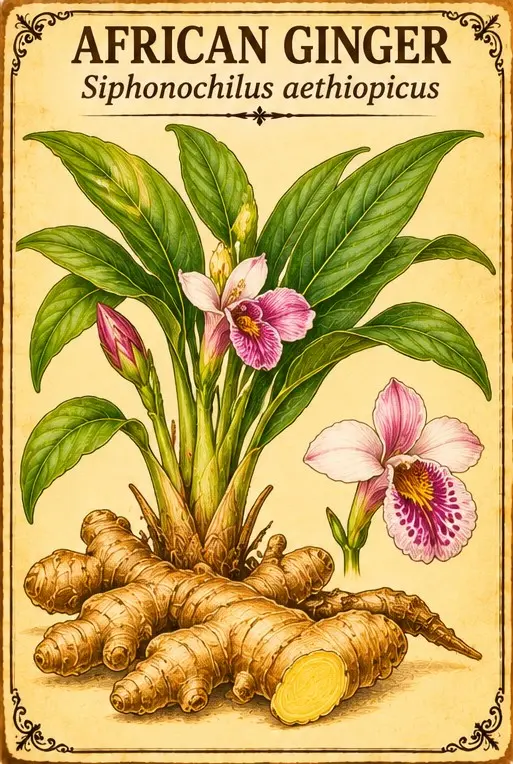
African Ginger
Siphonochilus aethiopicus
A critically endangered South African ginger whose rhizome is a traditional remedy for colds, flu, sinus problems and mild asthma. Extracts reduced lung inflammation in mice.
Safety at a glance
- PregnancyNothing recorded
- BreastfeedingNothing recorded
- MedicinesNothing recorded
- Who should avoid itNothing recorded
- AllergiesNothing recorded
- ToxicityNothing recorded
Tap a box to read the safety notes below. “Nothing recorded” means our sources don't cover it, not that it's safe.
What is African Ginger?
- Plant family
- Zingiberaceae, the ginger family
- Parts used
- The rhizome and roots
- Where it grows
- Sub-Saharan Africa
- Genus
- Siphonochilus
- Species
- aethiopicus
Also called
Wild Ginger
Traditionally used for
- Colds
- Flu
- Asthma
- Pain (traditional)
Traditionally described as
- Rhizome contains siphonochilone and eucalyptol
Health topics
Where African Ginger appears in symptom search, and why. Being listed doesn't mean it's a proven treatment.
- Asthma and Wheezing
Used for mild asthma; reduced lung inflammation in mice. Not tested in people.
- Colds and Nasal Congestion
A traditional South African remedy for colds, flu and sinus problems. Not tested in people.
Safety
Depends on how it's prepared
No human medical or safety studies were found. Because wild plants are critically endangered, cultivated sources are preferred.[1]Study
What does the research say?
Traditional use
These are traditional uses, not proven treatments.
Used across Sub-Saharan Africa for colds, coughs, flu, pain, inflammation and malaria. In South Africa, traditional healers use it for chest wheezing, sinus problems and mild asthma.[2]Study
Its extract is sold in some commercial health products, and a patented extract was developed for asthma and allergies. Wild plants are critically endangered in South Africa from over-harvesting.[1]Study
Laboratory & animal research
Lab and animal results show what might be worth studying in people. They don't show that the herb has these effects in humans.
In mice with allergic asthma, extracts reduced lung inflammation, though they didn't ease airway tightening.[2]Study
In short
No human medical or safety studies were found.
Sources
- [1] Ethnomedicinal uses, biological activities, phytochemistry and conservation of African ginger (Siphonochilus aethiopicus): A commercially important and endangered medicinal plant · DOI: 10.1016/j.jep.2020.113459Peer-reviewed study
- [2] Investigation of in vitro and in vivo anti-asthmatic properties of Siphonochilus aethiopicus · DOI: 10.1016/j.jep.2010.11.014Peer-reviewed study
This information is educational and traditional in nature, and is not a substitute for professional medical advice. Unfamiliar word? See what these words mean.